 What DEI Hiring Really Means at the Executive Level
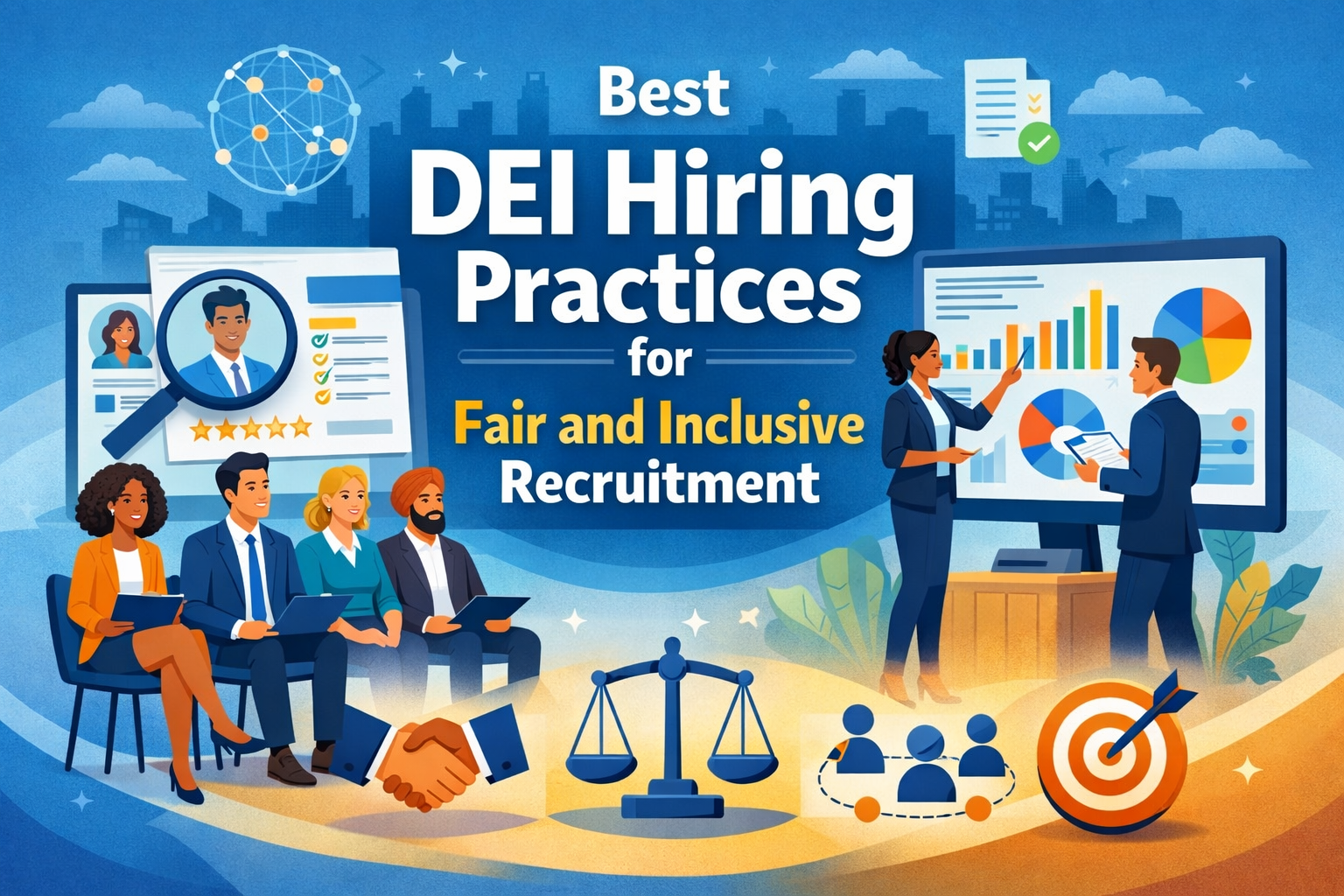
Best DEI Hiring Practices for Fair and Inclusive Recruitment

Hiring has become one of the most strategically sensitive functions in modern organizations. In an era defined by talent scarcity, rapid digital transformation, and heightened scrutiny from regulators, investors, and employees, how an organization hires is now as important as who it hires. For CEOs, founders, CHROs, and board members, Diversity, Equity, and Inclusion (DEI) hiring is no longer a peripheral HR initiative. It is a core business discipline that directly influences innovation capacity, leadership quality, employer reputation, and long-term enterprise value. The organizations that outperform today do not treat DEI hiring as a moral obligation or a branding exercise. Instead, they embed best DEI hiring practices into their recruitment systems so that fairness, consistency, and transparency are built into everyday decisions independent of individual bias or intent.Introduction: Why DEI Hiring Is No Longer Optional for Leadership
What DEI Hiring Really Means at the Executive Level
At a leadership level, DEI hiring is often misunderstood. Many organizations equate it with representation targets or compliance checklists. In reality, effective DEI hiring is about system design.
A Leadership Definition of DEI Hiring
Diversity ensures access to a broad range of skills, experiences, and perspectives.
Equity ensures that hiring decisions are based on capability and potential, not privilege or proximity.
Inclusion ensures that candidates experience respect, transparency, and psychological safety throughout the recruitment process.
The best DEI hiring practices focus on removing structural bias rather than correcting outcomes after the fact. They create hiring processes that are:
Consistent
Defensible
Scalable
Measurable
From a C-suite perspective, DEI hiring is about risk reduction, performance optimization, and long-term workforce resilience.
Why Fair and Inclusive Recruitment Is a Business Imperative
Executives are right to ask: What is the business return on DEI hiring?
1. Stronger Innovation and Decision-Making
Homogeneous teams tend to reinforce existing assumptions. Diverse teams challenge them. Inclusive hiring increases cognitive diversity, which improves strategic decision-making, innovation speed, and adaptability in uncertain markets.
2. Access to Wider and Higher-Quality Talent Pools
Traditional hiring pipelines often exclude capable candidates due to non-essential criteria. Inclusive recruitment expands access to underutilized talent segments without compromising standards.
3. Employer Brand and Talent Attraction
Top candidates increasingly evaluate companies based on fairness, transparency, and values alignment. Organizations known for fair hiring attract stronger applicants and reduce offer drop-offs.
4. Retention and Workforce Stability
Employees hired through equitable processes are more likely to trust leadership, engage deeply, and stay longer reducing costly attrition and rehiring cycles.
5. Legal, Reputational, and Governance Risk Mitigation
Bias-driven hiring exposes organizations to lawsuits, regulatory penalties, and reputational damage. Bias-free hiring systems reduce risk at scale.
Why Many DEI Hiring Initiatives Fail
Despite good intentions, many DEI hiring programs fail to deliver measurable impact. The reason is rarely resistance it is structural weakness.
Common Failure Points
Overreliance on unconscious bias training without process change
Subjective screening and interview decisions
Inconsistent hiring criteria across departments
Lack of data visibility at leadership level
DEI initiatives operating separately from core recruitment systems
Training changes awareness. Systems change outcomes.
The organizations that succeed with best DEI hiring practices focus less on persuasion and more on process discipline.
A C-Suite Framework for DEI-First Recruitment
1. Executive Ownership and Accountability
DEI hiring must be owned at the top. When CEOs and boards review hiring metrics regularly, fairness becomes a business priority not an HR aspiration.
Best practice organizations:
Assign an executive sponsor for DEI hiring
Review recruitment data at leadership meetings
Tie hiring outcomes to leadership performance metrics
2. Defining What “Fair Hiring” Means Internally
Fairness must be clearly defined and documented. This includes:
Standard evaluation criteria
Clear decision-making authority
Transparent escalation paths
Ambiguity is the enemy of equity.
3. Embedding DEI Into Core Hiring Systems
DEI should not exist as a parallel initiative. It must be embedded into:
Job architecture
Screening workflows
Interview structures
Offer and compensation frameworks
This is where structured HR systems, such as JioHRMS (jiohrms.com), help institutionalize fairness by design without adding operational burden or manual complexity.
Best DEI Hiring Practices for Fair and Inclusive Recruitment
1. Inclusive and Skills-Focused Job Design
Hiring equity begins with job design. Over-specified roles exclude capable candidates unnecessarily.
Best practices include:
Focusing on skills and outcomes rather than pedigree
Eliminating non-essential degree or experience requirements
Using neutral, inclusive language
Clearly defining “what success looks like” in the role
This approach increases applicant diversity while improving role clarity.
2. Expanding and Diversifying Talent Sourcing
Relying heavily on referrals or legacy networks reinforces homogeneity.
Inclusive recruitment strategies include:
Multi-channel sourcing
Partnerships with community and professional groups
Return-to-work and reskilling programs
Early-career and apprenticeship pipelines
The goal is not to lower standards but to broaden access to opportunity.
3. Standardized and Bias-Resistant Resume Screening
Unstructured screening is one of the largest sources of bias.
Best DEI hiring practices recommend:
Predefined shortlisting criteria
Skills-based scoring frameworks
Blind screening where feasible
Limited discretionary overrides with documented justification
This ensures candidates are evaluated on merit, not familiarity.
4. Structured Interviews That Reduce Subjectivity
Interviews are often the most biased stage of hiring.
Structured interviews improve fairness by:
Using predefined questions aligned to competencies
Applying consistent scoring rubrics
Requiring written evaluation rationales
Avoiding “culture fit” language in favor of “role fit”
Organizations that implement structured interviews consistently see higher quality hires and fewer biased decisions.
5. Diverse and Trained Interview Panels
Diverse panels improve both decision quality and candidate trust.
Key principles:
Avoid single-interviewer decisions
Rotate panel participation
Train interviewers on structured evaluation, not intuition
This balances perspectives while preventing bias concentration.
6. Transparent Candidate Communication and Experience
Inclusive recruitment is not just about selection it is about experience.
Best practices include:
Clear hiring timelines
Structured feedback for finalists
Consistent communication standards
A fair process feels fair to candidates, even when outcomes are negative.
7. Pay Equity and Offer Consistency
Hiring equity collapses if compensation decisions are opaque or inconsistent.
Best DEI hiring practices include:
Defined salary bands
Documented offer rationales
Regular pay equity audits
Transparent internal communication on compensation philosophy
Pay equity is essential for retention, trust, and reputation.
8. Measuring What Matters: DEI Hiring Metrics
Leadership cannot manage what it cannot see.
Critical metrics include:
Application-to-hire ratios by demographic
Funnel drop-off analysis
Time-to-hire comparisons
Offer acceptance rates
Quality of hire and retention by cohort
HRMS platforms like JioHRMS enable leaders to view these insights in real time, making best DEI hiring practices measurable rather than aspirational.
The Role of HR Technology in Scaling Fair Hiring
Manual hiring processes struggle to maintain consistency as organizations grow.
Modern HRMS platforms support inclusive recruitment by:
Enforcing standardized workflows
Centralizing candidate data
Maintaining audit trails
Providing leadership dashboards
Supporting compliance and governance requirements
Technology does not replace judgmentit standardizes fairness.
Governance, Ethics, and Regulatory Alignment
From a C-suite perspective, DEI hiring is also a governance issue.
Key Governance Principles
Transparent documentation of hiring decisions
Consistent policy enforcement across departments
Regular leadership and board reviews
Alignment with labor and data protection laws
Ethical, bias-free hiring strengthens organizational credibility with regulators, investors, and employees.
Measuring Long-Term Success of DEI Hiring
Short-term representation gains are not enough.
Long-term indicators include:
Retention parity across demographics
Promotion and internal mobility equity
Performance distribution consistency
Employee engagement and trust scores
The best DEI hiring practices focus on sustained outcomes, not optics.
Common Executive Misconceptions About DEI Hiring
“DEI hiring lowers standards.”
In reality, it raises standards by focusing on capability, not convenience.
“Inclusive recruitment slows hiring.”
Structured processes often reduce delays and rework.
“DEI is an HR issue.”
It is a leadership, governance, and enterprise-wide responsibility.
The Future of DEI Hiring: What Leaders Must Prepare For
Over the next decade, DEI hiring will increasingly be shaped by:
Ethical AI governance
Greater regulatory scrutiny
Increased candidate expectations for transparency
Board-level DEI reporting requirements
Organizations that embed best DEI hiring practices today will be better positioned to adapt tomorrow.
Call to Action
Fair and inclusive recruitment does not happen by chance it happens by design.
Organizations that lead in DEI hiring embed fairness into their systems, measure outcomes, and hold leadership accountable.
If you are ready to move from intention to execution, structured HR platforms like JioHRMS (jiohrms.com) can help operationalize inclusive hiring without complexity, and without compromise.
.png)