 What Is HR Automation? (Meaning Explained Clearly)
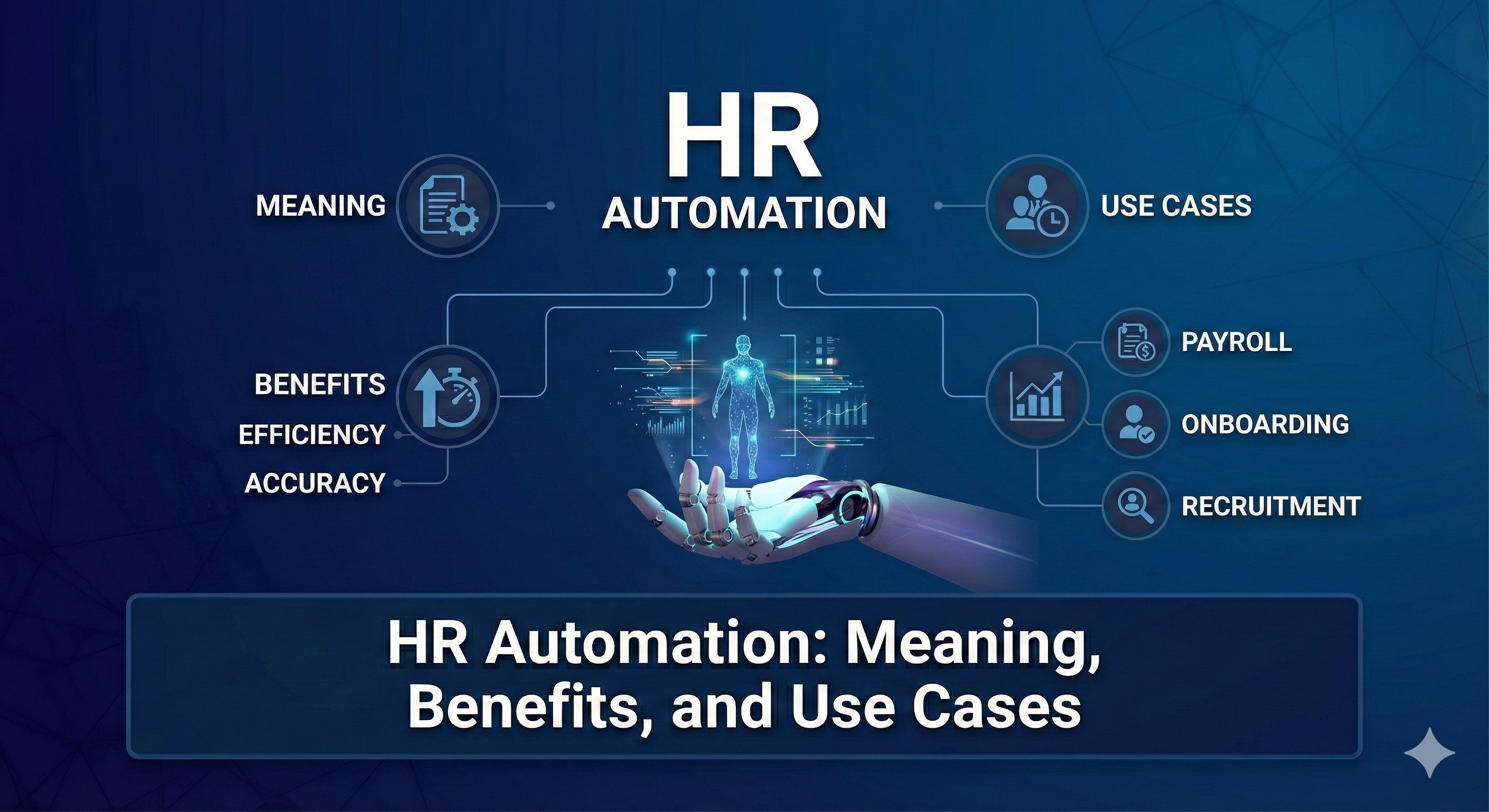
HR Automation: Meaning, Benefits, and Use Cases

Introduction: Why HR Automation Is a Boardroom Priority Today
Human Resources has evolved from an administrative support function into a strategic business enabler. In today’s environment defined by hybrid work, regulatory complexity, talent shortages, and rapid scaling manual HR processes are no longer sustainable. Spreadsheets, email approvals, and disconnected tools introduce inefficiencies, compliance risks, and data silos that directly impact leadership decisions.
This is why HR automation has become a critical priority for CXOs, CHROs, and founders. Beyond operational efficiency, HR automation strengthens governance, improves workforce visibility, and enables informed decision-making at scale. It is also the foundation of long-term HR digital transformation.
This guide explains the meaning of HR automation, its business benefits, and enterprise-level use cases, while demonstrating how modern platforms like JioHRMS help organizations automate HR processes in a practical, scalable way without making HR feel mechanical or impersonal.
What Is HR Automation? (Meaning Explained Clearly)
HR automation is the use of technology to streamline, standardize, and execute routine HR tasks with minimal manual intervention. These tasks typically include payroll processing, attendance management, recruitment workflows, onboarding, leave approvals, performance reviews, and compliance reporting.
Instead of relying on repetitive human effort, HR automation uses predefined rules, workflows, and integrations to ensure HR processes run accurately and consistently.
In simple terms:
Traditional HR depends heavily on people and paperwork
Automated HR depends on systems with human oversight
For leadership teams, this shift means HR teams spend less time on transactions and more time on strategic initiatives such as talent development, succession planning, and organizational design.
Why HR Automation Matters for C-Suite Leaders
For the C-suite, HR automation is not an operational upgrade it is a strategic investment. It directly impacts business performance across five critical areas:
Operational efficiency and cost control
Risk management and statutory compliance
Employee experience and retention
Workforce analytics and decision intelligence
Scalability and business continuity
When HR data is automated and centralized, leaders gain real-time visibility into workforce metrics such as attrition trends, payroll costs, productivity indicators, and compliance status without waiting for manual reports.
HR Automation as the Core of HR Digital Transformation
HR digital transformation is the process of reimagining HR operations using technology, data, and modern delivery models. However, transformation without automation is incomplete.
Without HR automation:
HR systems remain fragmented
Data stays siloed
HR decisions remain reactive
With automation:
Processes become standardized and auditable
Data flows seamlessly across departments
HR becomes predictive, not reactive
In essence, HR automation converts HR from a support function into a strategic growth engine.
Key Benefits of HR Automation for Modern Enterprises
1. Higher Efficiency and Lower Operational Costs
Manual HR activities consume significant time and resources. By automating routine workflows such as attendance tracking, leave approvals, and payroll calculations, organizations reduce administrative overhead and turnaround time.
Enterprises adopting HR automation often experience:
Faster payroll cycles
Reduced dependency on manual follow-ups
Optimized HR team productivity
This allows HR leaders to focus on initiatives that directly impact revenue and growth.
2. Accuracy, Consistency, and Compliance Assurance
Human error is one of the biggest risks in HR operations especially in payroll and statutory compliance. HR automation software applies policy rules consistently, reducing errors and ensuring audit-ready records.
This is particularly valuable in regions with complex labor laws, where non-compliance can result in penalties, litigation, or reputational damage.
3. Better Employee Experience and Engagement
Today’s workforce expects fast, transparent, and self-service HR interactions. Automated HR systems enable employees to:
Apply for leave independently
Access payslips and documents instantly
Track performance goals and feedback
When routine interactions are frictionless, employee satisfaction and trust increase directly impacting retention.
4. Data-Driven Leadership and Workforce Insights
One of the most strategic advantages of HR automation is access to real-time, reliable HR data. Automated systems provide dashboards and reports covering:
Hiring and attrition trends
Compensation and payroll costs
Workforce productivity patterns
Performance distribution
For the C-suite, this enables faster and more confident decision-making aligned with business objectives.
5. Scalable and Future-Ready HR Operations
Manual HR processes break down as organizations grow. HR automation ensures consistency and efficiency regardless of workforce size, location, or structure.
This scalability is essential for businesses planning expansion, mergers, or digital-first growth strategies.
HR Processes That Can Be Automated Today
Recruitment and Talent Acquisition
Recruitment involves multiple repetitive tasks such as resume screening, interview scheduling, and candidate tracking. HR automation streamlines these workflows, reducing time-to-hire while improving candidate experience.
Employee Onboarding and Offboarding
Automated onboarding ensures new hires receive timely access to systems, documents, and policies. Similarly, automated offboarding ensures compliance, asset recovery, and data security when employees exit.
Attendance, Leave, and Shift Management
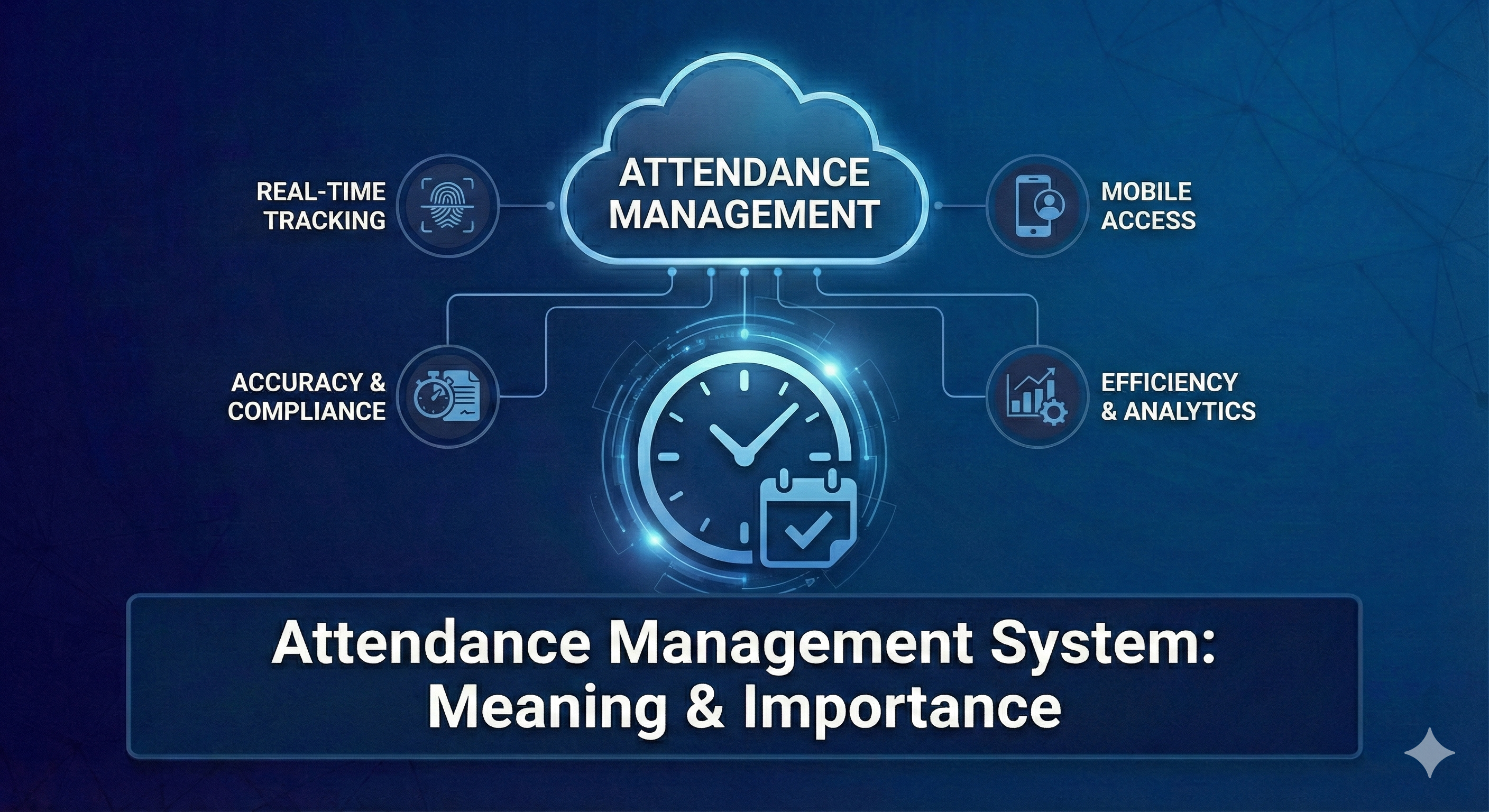
Attendance and leave tracking are among the most common areas to automate HR processes. Automation ensures accurate time records, policy-based leave calculations, and seamless payroll integration.
Payroll and Statutory Compliance
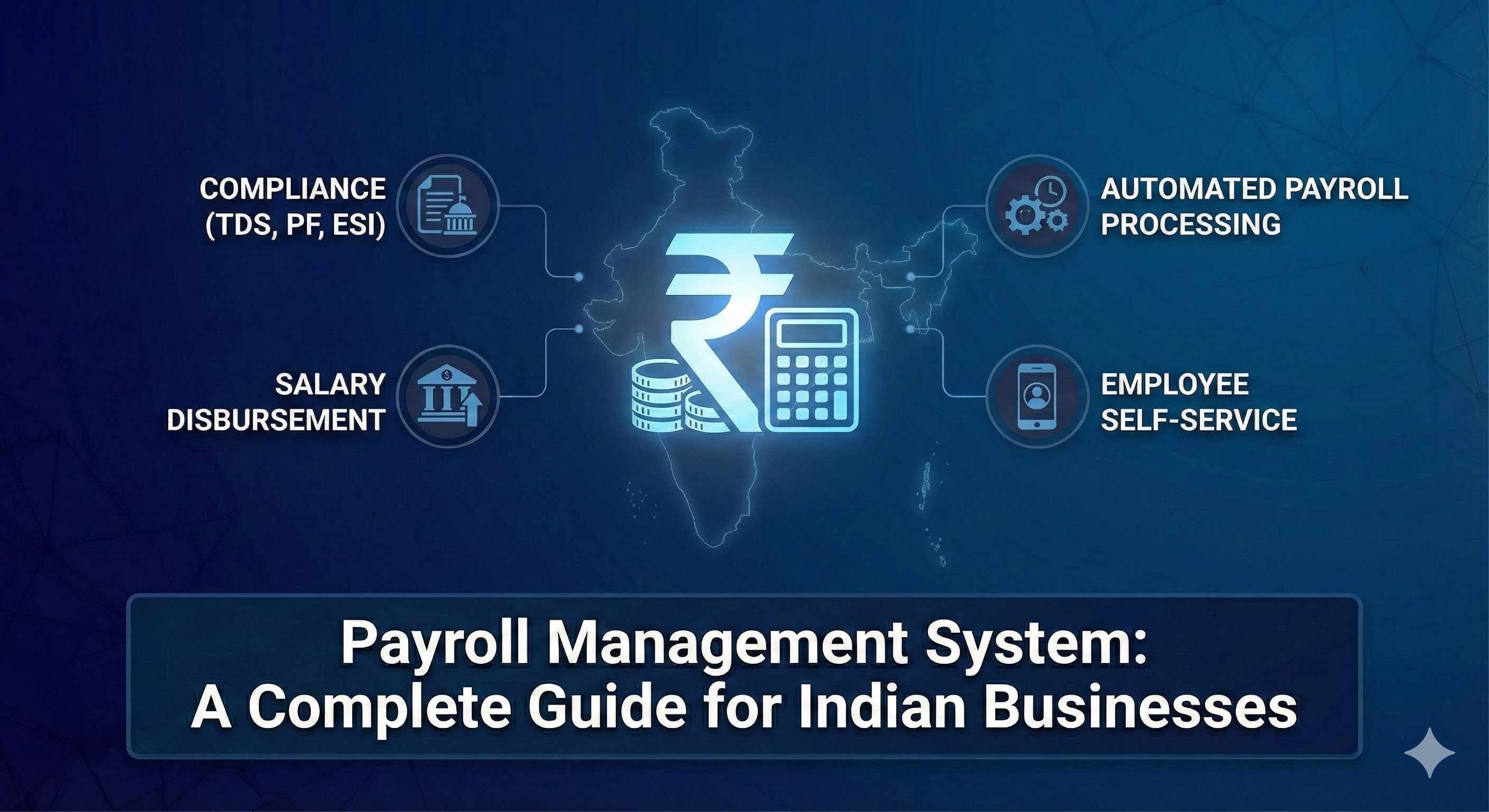
Payroll is one of the most critical HR functions. Automated payroll systems calculate salaries, deductions, and taxes accurately while generating compliance-ready reports.
This reduces payroll errors and ensures timely statutory filings.
Performance and Appraisal Management
Modern HR automation software supports continuous performance management through goal setting, review cycles, and feedback workflows aligning employee performance with organizational priorities.
HR Automation Use Cases by Organization Size
Startups and Early-Stage Companies
For startups, HR automation provides structure without complexity, enabling consistent HR practices as teams scale quickly.
Mid-Sized Enterprises
Mid-market companies use automation to unify fragmented HR systems, improve governance, and gain better workforce visibility.
Large Enterprises
Large organizations rely on HR automation to manage complex workforce structures, multi-location compliance, and advanced analytics at scale.
How JioHRMS Enables Practical HR Automation
JioHRMS is built to support organizations at every stage of their HR digital transformation journey. Its modular and configurable design allows businesses to automate HR processes progressively without disrupting operations.
Value-driven capabilities include:
Centralized employee data management
Automated attendance and payroll workflows
Configurable leave and policy rules
Real-time HR analytics and dashboards
Secure, role-based access control
These capabilities ensure automation delivers measurable business value rather than just technical efficiency.
Make your HR Software fun and easy!
Learn how JIO HRMS Software can help you automate HR processes and stay 100% compliant.
Measuring the ROI of HR Automation
For C-suite leaders, ROI is non-negotiable. HR automation delivers measurable returns through:
Reduced HR operational costs
Lower compliance and audit risks
Improved employee retention
Faster and more informed decision-making
Organizations that track these outcomes often see tangible benefits within the first year of implementation.
Common Challenges in HR Automation (and How to Address Them)
Change Resistance
Clear communication, leadership sponsorship, and structured training help drive adoption across the organization.
Data Quality and Integration
Successful automation depends on clean data and seamless integrations. A phased implementation approach minimizes disruption.
Over-Automation Risks
Not every HR decision should be automated. Strategic oversight ensures automation supports not replaces human judgment.
The Future of HR Automation
The future of HR automation lies in intelligent, predictive systems powered by analytics and AI. Organizations that invest early in scalable automation platforms will gain a long-term competitive advantage in talent management and operational resilience.
Looking for the Best Online HR Software? Check out the Best Online HR Software .