 What Is a Leave Management System?
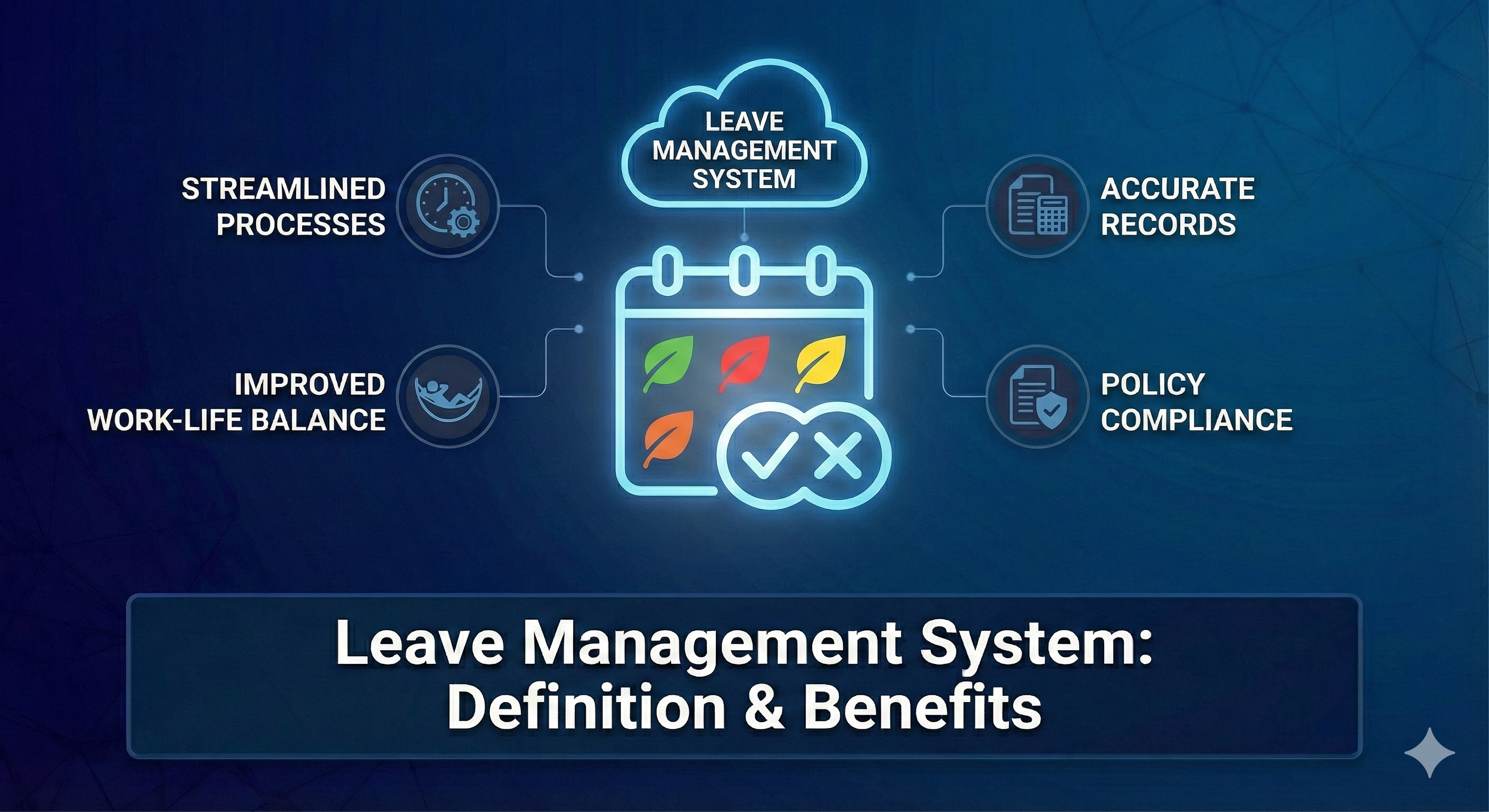
Leave Management System: Definition & Benefits

Why Leave Management Has Become a Boardroom Topic
For years, employee leave was treated as an administrative afterthought. Spreadsheets, emails, and informal approvals were considered “good enough.” However, in today’s enterprise environment defined by hybrid work, complex labor laws, talent scarcity, and heightened governance expectations leave management has emerged as a strategic priority.
From a C-suite perspective, leave directly impacts operational continuity, payroll accuracy, compliance exposure, employee engagement, and leadership credibility. A single mismanaged leave policy can cascade into workforce shortages, financial discrepancies, or even regulatory penalties.
This is why organizations across industries are adopting a modern leave management system not as an HR convenience, but as a foundational element of enterprise workforce governance.
With global demand for the primary keyword leave management system exceeding 90,000+ monthly searches worldwide (high commercial and informational intent), the topic has become central to executive conversations around digital HR transformation.
This article explains the definition, strategic benefits, leadership implications, and real-world value of implementing a structured leave management framework.
What Is a Leave Management System?
A leave management system is a digital platform that enables organizations to define leave policies, automate approvals, track balances, ensure statutory compliance, and integrate leave data with payroll and attendance systems.
At its core, it replaces fragmented, manual workflows with a centralized, rule-based, and auditable process for managing all types of employee leave paid, unpaid, statutory, and custom.
However, for leadership teams, the true value lies beyond automation. A modern leave system functions as a decision-support layer that provides visibility into workforce availability, planned absences, and long-term capacity risks.
Unlike traditional HR tools, advanced leave platforms are designed to align employee flexibility with organizational stability.
Why Traditional Leave Management No Longer Works
Before understanding the benefits, it is important to acknowledge why legacy leave processes fail at scale.
Most organizations still rely on email approvals, Excel trackers, or disconnected HR tools. While these methods may work for small teams, they break down rapidly as organizations grow or diversify.
Manual leave management introduces four systemic risks:
First, data inconsistency. When leave records exist across multiple files and inboxes, accuracy becomes impossible to guarantee.
Second, compliance exposure. Labor laws vary by location, employee category, and tenure. Manual tracking often fails to reflect these nuances.
Third, payroll leakage. Incorrect leave balances directly affect salary calculations, resulting in overpayments or disputes.
Finally, leadership blind spots. Executives lack real-time insight into workforce availability, making capacity planning reactive rather than strategic.
A structured leave management system addresses these challenges holistically.
The Strategic Importance of Leave Management for C-Suite Leaders
While leave management is often owned by HR, its impact is enterprise-wide. For C-suite leaders, the system influences five critical outcomes.
Workforce Continuity and Business Resilience
Unplanned absenteeism is one of the leading causes of operational disruption. Without visibility into who is off, when, and why, teams struggle to meet deadlines and customer expectations.
A centralized system allows leadership to anticipate gaps, redistribute workloads, and maintain continuity even during peak leave seasons.
Governance, Risk, and Compliance (GRC)
Leave policies are governed by statutory regulations that differ by geography and industry. Non-compliance can lead to audits, penalties, or reputational damage.
A modern hr leave system embeds compliance rules directly into workflows, reducing reliance on manual interpretation and lowering regulatory risk.
Financial Accuracy and Payroll Integrity
Leave balances directly affect payroll outcomes. Errors in tracking paid leave, unpaid leave, or carry-forwards result in financial discrepancies.
By integrating leave data with payroll, organizations eliminate reconciliation errors and protect financial integrity.
Employee Trust and Organizational Culture
Employees judge fairness not by intent, but by consistency. When leave approvals feel arbitrary or balances are unclear, trust erodes.
Transparent leave tracking builds confidence, improves engagement, and reinforces a culture of accountability.
Data-Driven Leadership Decisions
Modern executives expect dashboards, not anecdotes. Leave analytics reveal patterns in absenteeism, burnout risks, and workforce utilization enabling proactive leadership interventions.
Types of Leave a Modern System Must Support
A comprehensive leave management system must be flexible enough to handle diverse leave categories without complexity.
These typically include:
Paid leave such as earned leave, casual leave, and sick leave
Statutory leave including maternity, paternity, and public holidays
Unpaid leave and loss of pay
Compensatory offs and shift-based leave
Custom organizational leave policies
The ability to configure rules rather than hard-code them is what separates basic tools from enterprise-ready platforms.
Key Benefits of a Leave Management System
1. Centralized Policy Enforcement
One of the most significant benefits is policy standardization. Leave rules are defined once and applied uniformly across the organization.
This eliminates ambiguity, reduces managerial discretion, and ensures that every employee is treated fairly regardless of department or location.
2. End-to-End Automation
Automation removes friction from the leave lifecycle. Employees apply through self-service portals, managers approve with contextual visibility, and balances update automatically.
This improves efficiency while freeing HR teams from repetitive administrative tasks.
3. Real-Time Leave Visibility
Executives gain access to real-time dashboards showing who is on leave, upcoming absences, and department-level availability.
This visibility supports informed decision-making, especially in fast-moving or resource-constrained environments.
4. Seamless Payroll and Attendance Integration
When leave data flows directly into attendance and payroll systems, accuracy improves significantly.
Platforms like JioHRMS ensure that approved leave reflects instantly in salary calculations, eliminating manual adjustments and disputes.
5. Enhanced Employee Experience
Modern employees expect consumer-grade digital experiences at work. Self-service leave applications, instant balance checks, and clear approval workflows improve satisfaction and reduce HR dependency.
This is particularly important in remote and hybrid work environments.
6. Audit-Ready Compliance
Every leave action application, approval, rejection, or modification is logged and time-stamped.
This creates a reliable audit trail that simplifies internal reviews and external audits, aligning with enterprise governance standards.
Leave Management as a Component of Employee Leave Management Strategy
While tools are important, leadership success depends on strategy.
Effective employee leave management balances three competing priorities: employee well-being, operational efficiency, and legal compliance.
A modern system enables organizations to move from reactive leave handling to proactive leave planning. Trends such as excessive sick leave or burnout-related absences become visible early, allowing leaders to intervene constructively.
This strategic shift positions leave management as a lever for retention, productivity, and workforce sustainability.
How Leave Tracking Software Enables Smarter Workforce Planning
Advanced leave tracking software transforms raw leave data into actionable insights.
Executives can analyze patterns across departments, roles, and seasons. For example, consistent absenteeism in a particular team may signal workload imbalance or leadership gaps.
Over time, these insights inform hiring plans, shift structures, and policy refinements making workforce planning evidence-based rather than intuitive.
Role of Technology in Scaling Leave Management
As organizations scale, complexity increases exponentially. More employees mean more leave requests, more policies, and more exceptions.
A cloud-based leave management system scales without adding administrative burden. Rule engines, automated workflows, and configurable policies ensure consistency even as headcount grows.
JioHRMS, for instance, allows organizations to manage multi-location, multi-policy leave frameworks within a single unified platform without increasing HR workload.
Security, Privacy, and Data Integrity Considerations
For C-suite leaders, data security is non-negotiable.
Leave data includes sensitive personal and medical information. Enterprise-grade systems enforce role-based access, encryption, and audit controls to protect employee privacy.
Choosing a secure hr leave system demonstrates leadership commitment to ethical data handling and regulatory compliance.
Measuring ROI of a Leave Management System
Executives often ask how to justify the investment.
The ROI of a leave management system is realized across multiple dimensions:
Reduced administrative hours for HR teams
Lower payroll error rates
Improved compliance outcomes
Higher employee engagement scores
Better utilization of workforce capacity
While these benefits may not always appear directly on the balance sheet, their cumulative impact on organizational performance is significant.
Best Practices for Implementing a Leave Management System
Successful implementation requires more than software deployment.
Leadership alignment is critical. Policies must be reviewed, standardized, and communicated clearly.
Change management is equally important. Employees and managers need training and transparency to build trust in the system.
Platforms like JioHRMS support this transition through intuitive interfaces, configurable workflows, and comprehensive reporting reducing adoption friction without heavy customization.
Why Forward-Thinking Organizations Choose Modern Leave Platforms
Leading organizations no longer view leave management as an isolated HR function. Instead, they treat it as part of a broader digital workforce ecosystem.
When leave data integrates seamlessly with attendance, payroll, and analytics, leadership gains a unified view of workforce health.
This is where solutions like JioHRMS quietly add value by enabling structure, visibility, and control without disrupting existing processes.
The Future of Leave Management Systems
The future of leave management is intelligent, predictive, and employee-centric.
AI-driven insights will anticipate absenteeism trends. Policy engines will adapt dynamically to workforce behavior. Employee experience will continue to converge with consumer technology standards.
Organizations that invest early in modern leave infrastructure position themselves to lead, not react.
Conclusion: Leave Management as a Leadership Imperative
A leave management system is no longer optional for growing or enterprise organizations. It is a leadership tool that supports governance, trust, and performance.
For C-suite leaders, the question is not whether to digitize leave management but how quickly it can be aligned with strategic objectives.
When implemented thoughtfully, a leave system becomes a quiet enabler of operational excellence and employee confidence.
Make your HR Software fun and easy!
Learn how JIO HRMS Software can help you automate HR processes and stay 100% compliant.