 What Is Statutory Compliance in Payroll?
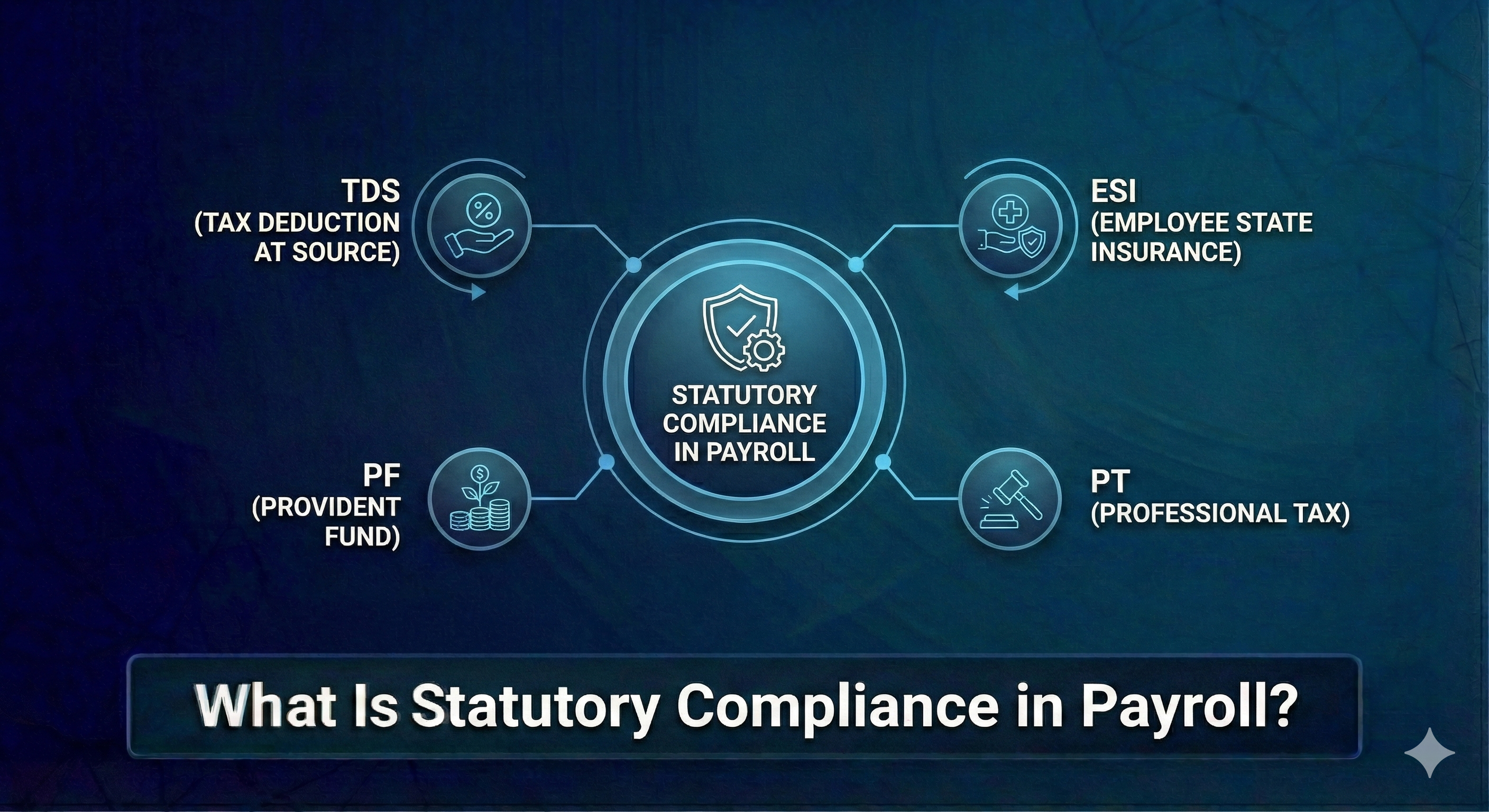
What Is Statutory Compliance in Payroll?

Why Payroll Compliance Is No Longer an Operational Detail
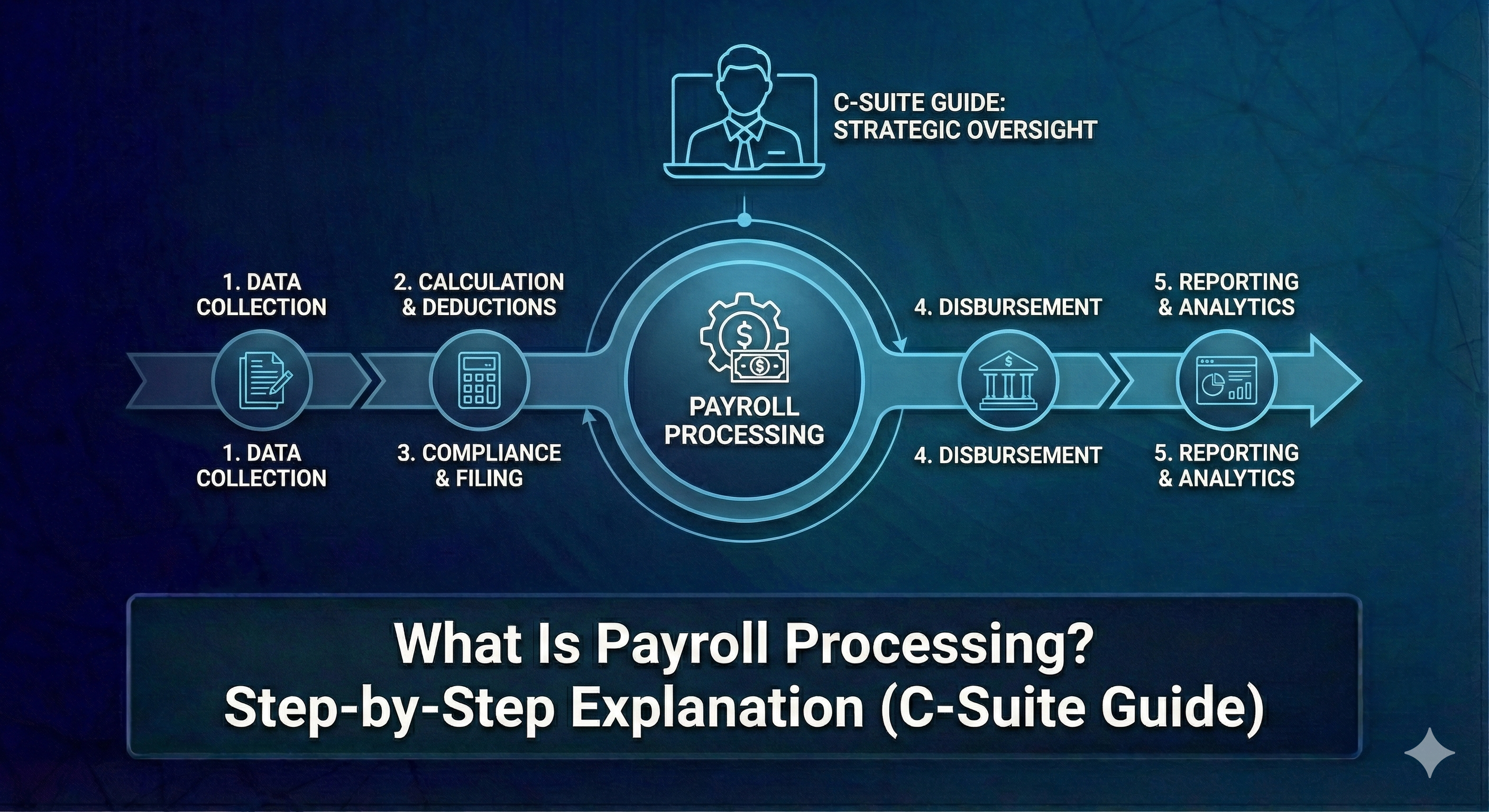
Payroll has quietly evolved into one of the most sensitive governance functions within an organization. What was once viewed as a routine HR or finance activity is now closely scrutinized by regulators, auditors, employees, investors, and boards.
At the center of this scrutiny lies statutory compliance in payroll the legal obligation of an employer to process salaries strictly in accordance with applicable payroll laws. For C-suite leaders, payroll compliance is not about calculations alone; it is about protecting the organization from regulatory exposure while maintaining employee trust.
As businesses scale, expand geographically, or prepare for audits, even minor lapses in payroll compliance can surface as significant risks. Understanding statutory compliance in payroll is therefore essential for leadership teams who want long-term operational stability and credibility.
What Is Statutory Compliance in Payroll?
Statutory compliance in payroll refers to an organization’s responsibility to follow all legally mandated rules while paying employees. This includes accurate salary calculations, timely statutory deductions, correct employer contributions, proper filings, and compliant record-keeping.
In simpler terms, payroll compliance ensures that every rupee paid or deducted from an employee’s salary aligns with applicable payroll laws. These laws are designed to protect employee rights, ensure tax transparency, and maintain social security frameworks.
From a business perspective, statutory compliance in payroll functions as a protective layer shielding the organization from legal disputes, financial penalties, and operational disruptions.
Why Statutory Compliance in Payroll Matters to the C-Suite
For senior leadership, payroll compliance is no longer a back-office concern. It directly influences governance, risk management, and organizational reputation.
Regulatory enforcement has intensified in recent years, with authorities leveraging digital systems to cross-verify payroll data. At the same time, investors and auditors increasingly treat payroll compliance India as a due-diligence priority during funding rounds, mergers, or public listings.
Beyond compliance risks, payroll accuracy affects employee confidence. Errors in statutory deductions or delayed filings can quickly erode trust, impacting retention and employer branding. For directors and key officers, certain payroll laws also introduce personal liability, making compliance a leadership responsibility rather than a delegated task.
Core Elements of Statutory Compliance in Payroll
To fully understand statutory compliance in payroll, it is important to examine the foundational elements that make payroll legally sound.
Statutory Deductions
Statutory deductions are mandatory deductions taken from employee salaries as prescribed by law. These deductions are not optional and must be calculated with precision, as even small errors can compound over time.
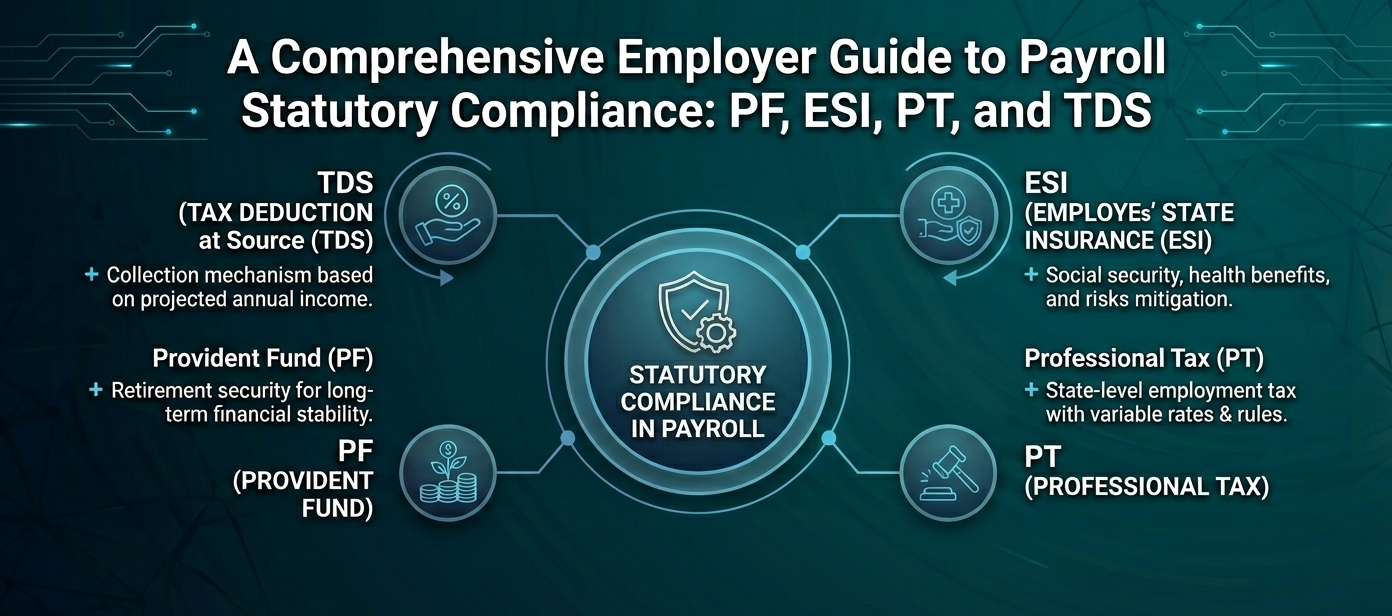
Common statutory deductions include provident fund contributions, employee state insurance, professional tax, and tax deducted at source. Each deduction has specific eligibility thresholds, calculation methods, and remittance timelines. Incorrect application of these rules is one of the most frequent causes of payroll non-compliance.
Employer Contributions and Liabilities
Payroll compliance extends beyond employee deductions. Employers are legally required to contribute their share to statutory funds such as provident fund and employee state insurance. In addition, long-term obligations like gratuity must be accurately provisioned.
Failure to deposit employer contributions on time often attracts interest and penalties, and repeated violations can invite regulatory scrutiny. For leadership teams, this underscores the importance of treating payroll liabilities as predictable statutory commitments rather than variable expenses.
Payroll Filings and Regulatory Reporting
Statutory compliance in payroll requires organizations to submit regular filings to government authorities. These filings validate that deductions and contributions have been correctly calculated and deposited within prescribed timelines.
Late or inaccurate filings can trigger notices, inspections, or audits. Over time, repeated filing discrepancies can damage an organization’s compliance track record, increasing future regulatory attention.
Record Maintenance and Audit Readiness
Payroll laws mandate that employers maintain detailed payroll records for defined periods. These records must be readily accessible during inspections or audits.
Maintaining structured, digital records ensures that organizations remain audit-ready at all times. Modern HRMS platforms help centralize payroll data, making compliance documentation easier to retrieve and verify when required.
Understanding Statutory Compliance in Payroll in India
Payroll compliance India is particularly complex due to the coexistence of central and state-specific payroll laws. Compliance requirements can vary based on employee location, salary structure, industry tye, and organizational size.
As organizations expand across multiple states, managing statutory compliance in payroll becomes increasingly challenging without standardized systems. What remains compliant in one state may require different calculations or filings in another, increasing the margin for error.
Key Payroll Laws Governing Compliance in India
Indian payroll compliance is governed by several critical laws, each addressing different aspects of employee compensation and welfare.
The Employees Provident Fund legislation mandates retirement savings contributions for eligible employees, while the Employees’ State Insurance framework provides medical and social security benefits. Income tax regulations require employers to deduct and deposit taxes at source, ensuring government revenue collection.
State-specific laws such as professional tax further complicate payroll compliance, as rates and rules vary across regions. Additionally, wage-related laws regulate minimum pay standards and salary disbursement timelines, while gratuity laws impose long-term financial obligations on employers.
Together, these payroll laws form the backbone of statutory compliance in payroll.
Common Challenges in Payroll Compliance Management
Despite best intentions, many organizations struggle to maintain consistent payroll compliance. Frequent regulatory changes, manual calculations, and fragmented data systems often create compliance gaps.
Multi-state operations further amplify complexity, especially when payroll teams rely on spreadsheets or disconnected tools. Lack of real-time visibility and audit trails makes it difficult for leadership to assess compliance health accurately.
Consequences of Payroll Non-Compliance
Non-compliance with statutory payroll requirements can result in financial penalties, interest charges, legal proceedings, and reputational damage. In severe cases, organizations may face restrictions on operations or licensing.
For leadership teams, payroll non-compliance represents a preventable governance failure one that can undermine years of brand building and operational growth.
How Modern HRMS Platforms Enable Payroll Compliance
Technology has transformed how organizations manage statutory compliance in payroll. Instead of relying on manual interpretation of payroll laws, modern HRMS platforms embed compliance rules directly into payroll workflows.
Solutions like JioHRMS help organizations automate statutory deductions, track compliance deadlines, generate accurate reports, and maintain audit-ready records. By integrating attendance, payroll, and compliance data into a single system, such platforms reduce dependency on manual checks and minimize compliance risk.
Statutory Compliance as a Strategic Business Advantage
Forward-thinking organizations no longer view statutory compliance in payroll as a regulatory burden. Instead, they recognize it as a foundation for sustainable growth.
Strong payroll compliance improves employee trust, enhances investor confidence, and prepares organizations for audits and expansion. When compliance is built into systems rather than managed reactively, leadership teams gain clarity and control.
Best Practices for Ensuring Long-Term Payroll Compliance
Organizations that maintain strong payroll compliance typically focus on standardization, automation, and continuous monitoring. Regular internal audits, centralized payroll data, and compliance-enabled HR systems significantly reduce exposure to regulatory risk.
Embedding compliance into daily payroll operations allows businesses to scale without increasing compliance complexity.
The Future of Statutory Compliance in Payroll
The future of payroll compliance is increasingly real-time and predictive. AI-enabled HRMS platforms are helping organizations identify compliance risks early, forecast statutory liabilities, and remain audit-ready at all times.
As regulatory environments continue to evolve, statutory compliance in payroll will become a defining capability for well-governed organizations.
Final Perspective
Statutory compliance in payroll is not merely a legal obligation it is a leadership responsibility. Organizations that prioritize payroll compliance protect their people, their leadership, and their long-term growth.
Make your HR Software fun and easy!
Learn how JIO HRMS Software can help you automate HR processes and stay 100% compliant.