 Why Tracking Employee Attendance Is a Strategic Priority
How to Track Employee Attendance Effectively: A Strategic Guide for C-Suite Leaders

In today’s dynamic business environment, the ability to track employee attendance effectively is no longer a routine administrative responsibility. Instead, it has become a strategic priority that directly influences payroll accuracy, workforce productivity, compliance integrity, and long-term financial stability.
As organizations expand across multiple locations, adopt hybrid work models, and manage distributed teams, attendance tracking becomes increasingly complex. Leaders can no longer rely on outdated systems that simply record entry and exit times. They must now ensure that the way they track employee attendance aligns with enterprise goals, regulatory requirements, and digital transformation initiatives.
Search trends indicate that the primary keyword track employee attendance has a very high global monthly search volume exceeding 40,000 searches. This reflects the urgency among business leaders to modernize their workforce management frameworks. However, while many organizations recognize the importance of attendance systems, few approach it from a strategic, data-driven perspective.
This guide is designed specifically for C-suite executives who want a comprehensive understanding of how to track employee attendance effectively, reduce operational risk, and convert workforce data into measurable business advantage.
Why Tracking Employee Attendance Is a Strategic Priority
When executives discuss productivity, they often focus on performance metrics, revenue growth, or cost optimization. Yet attendance data remains one of the most underutilized indicators of organizational health. The decision to systematically track employee attendance impacts financial forecasting, compliance exposure, and workforce planning at a foundational level.
Attendance is not merely about knowing who is present. It reflects patterns of engagement, punctuality, absenteeism, overtime utilization, and workforce discipline. When organizations fail to track employee attendance with accuracy, they expose themselves to payroll discrepancies, compliance penalties, and managerial blind spots.
Moreover, structured attendance systems create accountability across hierarchies. They establish fairness, prevent disputes, and reinforce operational discipline. In industries governed by strict labor regulations, the ability to track employee attendance accurately also ensures that statutory wage calculations and overtime payments remain defensible during audits.
Forward-looking organizations treat attendance data as strategic intelligence rather than transactional records. When integrated with analytics, attendance trends can reveal emerging risks such as burnout, disengagement, or capacity shortages. This transformation from basic record-keeping to predictive analysis is where modern leadership must focus.
Traditional vs Modern Attendance Tracking Methods
To fully understand how to track employee attendance effectively, leaders must evaluate the evolution of available systems.
Historically, organizations relied on manual registers or punch cards. Although these systems were simple, they introduced multiple inefficiencies. Human errors, proxy entries, and reconciliation delays were common. While manual systems may appear cost-effective initially, they rarely scale with business growth.
Spreadsheets represented the next phase of attendance tracking methods. Although more structured than paper logs, they remained dependent on manual data entry. As organizations expanded, spreadsheet-based systems became fragmented, leading to version control issues and inaccurate payroll calculations.
Biometric systems improved authenticity by introducing fingerprint or facial recognition technology. These systems reduced proxy attendance but required hardware investments and maintenance. Additionally, they were not always flexible enough for remote or field-based employees.
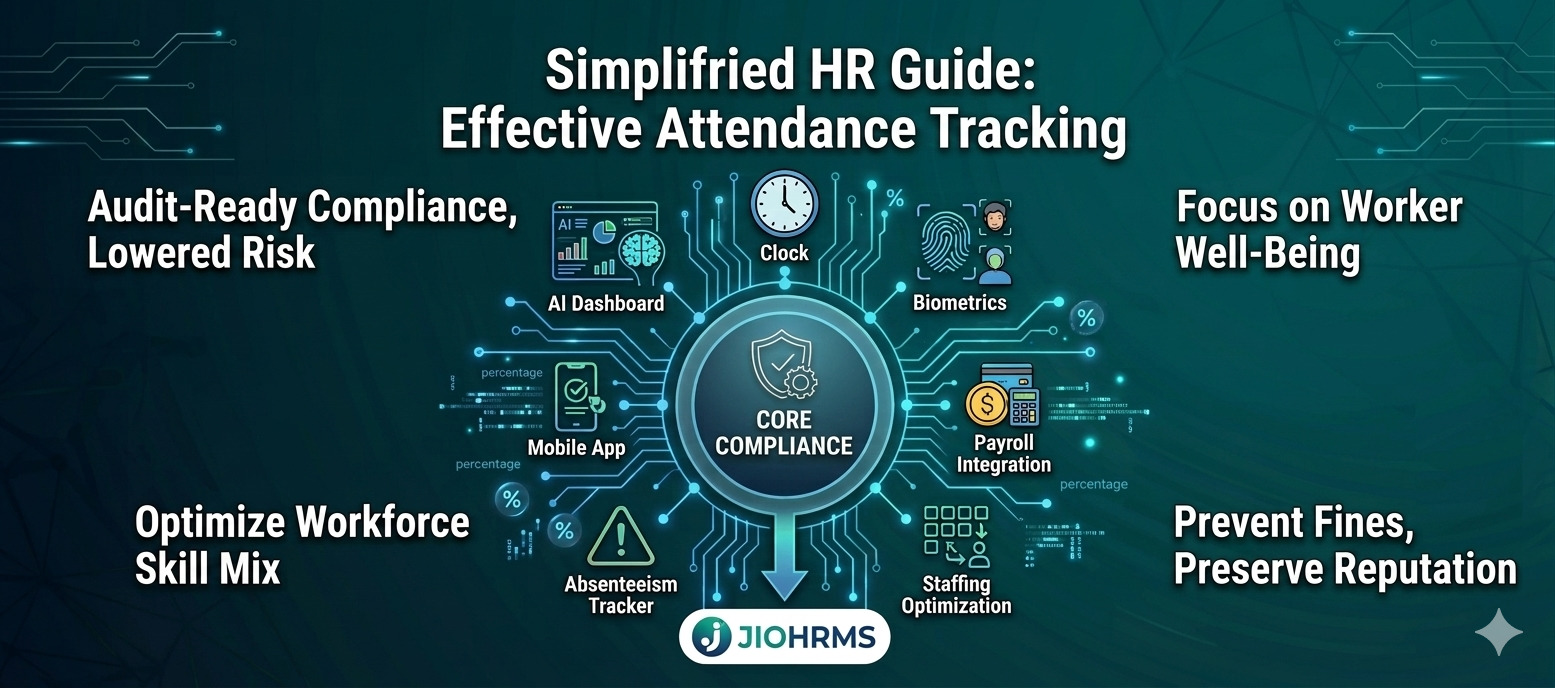
The modern era has introduced cloud-based employee attendance software that integrates mobile access, geo-fencing, automated calculations, and real-time dashboards. These platforms allow organizations to track employee attendance seamlessly across office, factory, and remote environments. More importantly, they connect attendance data directly to payroll, leave management, and compliance workflows, eliminating the silos that often undermine operational efficiency.
Key Challenges Organizations Face in Attendance Tracking
Despite technological advancements, many enterprises still struggle to track employee attendance consistently and accurately.
One common challenge is fragmented data capture. When different departments use separate tools, reconciliation becomes complicated. Payroll teams may spend days verifying attendance logs, increasing administrative overhead and delaying salary disbursement.
Compliance risk is another significant concern. Labor laws in India require accurate documentation of working hours and overtime. Organizations that fail to track employee attendance systematically may face disputes or penalties during inspections.
Hybrid work has introduced additional complexity. Remote employees, flexible shifts, and distributed teams require adaptable systems. Without digital tools, leaders cannot reliably track employee attendance outside traditional office settings.
Furthermore, lack of real-time visibility prevents proactive intervention. By the time absenteeism patterns are noticed, productivity losses may already have occurred. Modern enterprises need systems that enable them to track employee attendance in real time, rather than retrospectively analyzing monthly reports.
How to Track Employee Attendance Effectively: A Structured Approach
For C-suite leaders, the process of modernizing attendance management should be methodical and aligned with business strategy.
The first step is defining organizational objectives. Whether the priority is reducing absenteeism, improving payroll accuracy, or ensuring compliance readiness, the strategy to track employee attendance must support broader enterprise goals.
Next, companies must standardize attendance policies. Clear definitions of working hours, grace periods, overtime rules, and leave integration ensure consistency. Without policy clarity, even the most advanced systems cannot effectively track employee attendance.
Technology selection becomes the foundation of long-term success. Cloud-based employee attendance software offers scalability, security, and integration capabilities. A unified HRMS platform allows organizations to track employee attendance while synchronizing payroll calculations, leave balances, and statutory compliance automatically.
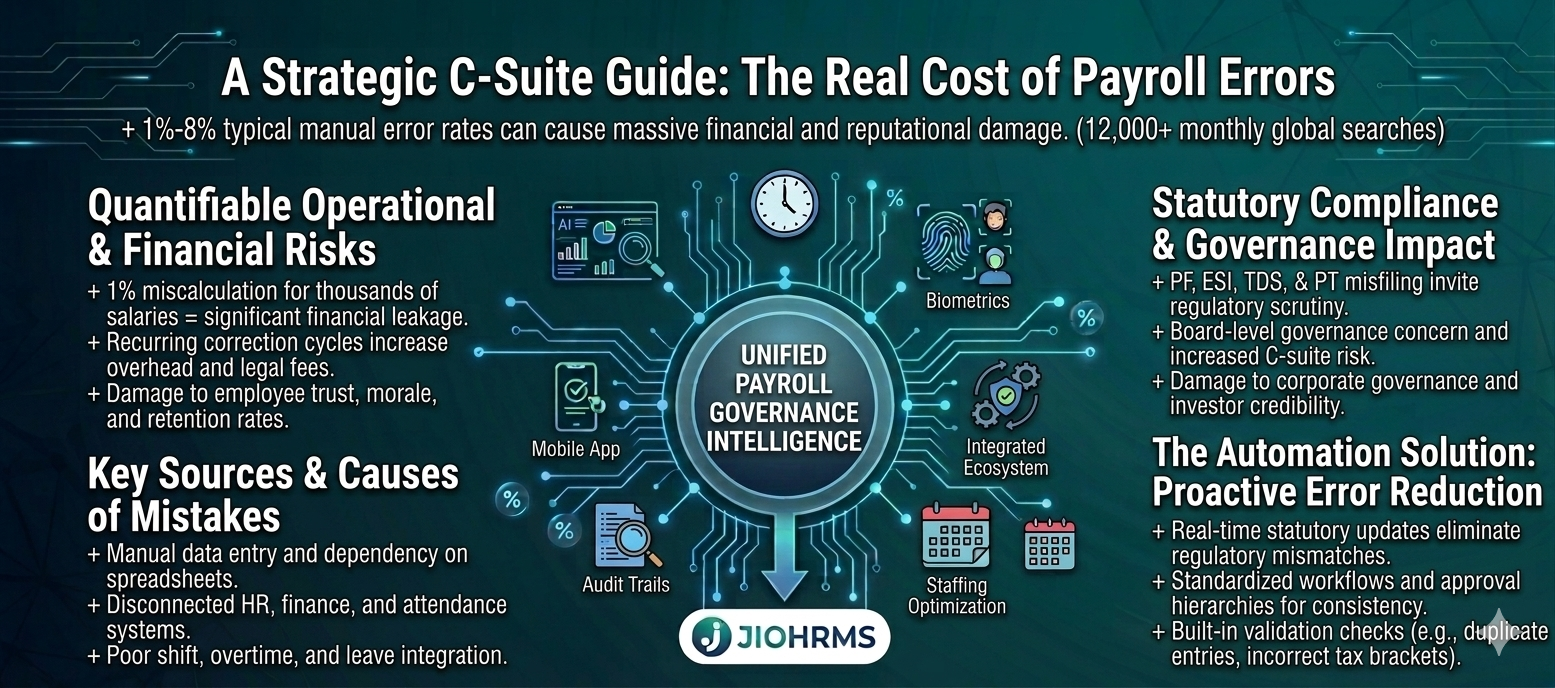
Integration with payroll is particularly critical. Manual reconciliation increases error rates and creates financial risk. Automated workflows ensure that when companies track employee attendance, salary calculations reflect accurate, real-time data.
Finally, leadership must leverage analytics. Attendance dashboards provide insights into trends, overtime spikes, absenteeism rates, and departmental comparisons. This enables executives to move beyond operational monitoring and toward strategic workforce optimization.
The Role of Employee Attendance Software in Enterprise Growth
Modern employee attendance software does far more than capture check-in times. It serves as a central data hub connecting multiple HR functions.
Automation eliminates manual intervention, reducing discrepancies and disputes. Mobile-enabled attendance allows field employees to log in securely, while geo-tagging ensures location authenticity. For organizations with multiple branches, centralized dashboards provide enterprise-wide visibility.
When integrated within a broader HRMS ecosystem such as JioHRMS (jiohrms.com), attendance management becomes part of a unified workforce intelligence framework. Leaders can track employee attendance, monitor leave balances, calculate overtime, and generate compliance-ready reports within a single platform.
Such integration reduces administrative burden while enhancing executive oversight. Instead of reviewing fragmented spreadsheets, leadership teams gain real-time visibility into workforce metrics that influence operational decisions.
Transforming Attendance Data into Strategic Intelligence
The true value emerges when organizations use attendance data proactively. Companies that consistently track employee attendance gain predictive insights into workforce behavior.
For instance, recurring absenteeism in a department may signal morale challenges. Unexpected overtime spikes may indicate staffing shortages. Patterns of late arrivals might reflect scheduling inefficiencies.
AI-driven analytics within advanced HRMS platforms enable leadership to forecast workforce requirements and mitigate risks before they escalate. In this way, the ability to track employee attendance becomes a strategic advantage rather than a compliance obligation.
Compliance and Risk Mitigation
Regulatory frameworks require detailed time records. Organizations must demonstrate accurate wage calculations, overtime payments, and statutory adherence. Therefore, the decision to track employee attendance digitally strengthens legal defensibility.
Automated audit trails ensure that historical data remains accessible and tamper-proof. This significantly reduces exposure during labor inspections or disputes. Additionally, centralized storage eliminates inconsistencies that often arise from decentralized record-keeping.
Hybrid Work and the Future of Attendance Management
Hybrid work models demand flexibility without compromising accountability. Companies must adapt their strategies to track employee attendance across physical and digital workplaces.
Cloud-based systems provide remote check-ins, manager approvals, and real-time updates. Rather than relying solely on physical presence, organizations can align attendance tracking with productivity metrics and output-based evaluation.
Looking ahead, AI and predictive analytics will redefine attendance tracking methods. Workforce forecasting, automated shift optimization, and behavioral trend analysis will further enhance strategic planning capabilities.
Measuring ROI from Effective Attendance Tracking
When enterprises modernize how they track employee attendance, measurable financial and operational gains follow. Reduced payroll leakage, improved compliance posture, optimized staffing, and enhanced productivity all contribute to stronger margins.
Even marginal improvements in attendance accuracy can result in significant annual savings for mid-sized and large organizations. More importantly, structured systems create transparency and trust, reinforcing organizational culture.
Final Thoughts
To track employee attendance effectively is to establish operational clarity across the enterprise. It supports financial discipline, strengthens compliance, enhances workforce accountability, and provides leadership with data-driven insights.
In a rapidly evolving business landscape, attendance tracking must transition from manual record-keeping to intelligent automation. Organizations that embrace integrated, analytics-driven systems will not only improve efficiency but also gain strategic foresight.
Call to Action
Transform Attendance Management with JioHRMS
If your organization is evaluating how to track employee attendance more effectively while improving compliance, payroll precision, and executive visibility, it may be time to explore a unified HRMS approach.
JioHRMS enables enterprises to automate attendance, payroll, statutory compliance, and workforce analytics within a secure cloud platform designed for scalability and accuracy.
Discover how intelligent attendance management can strengthen your organization’s operational performance and long-term growth trajectory.