 Why Growing Companies Must Digitize HR Operations
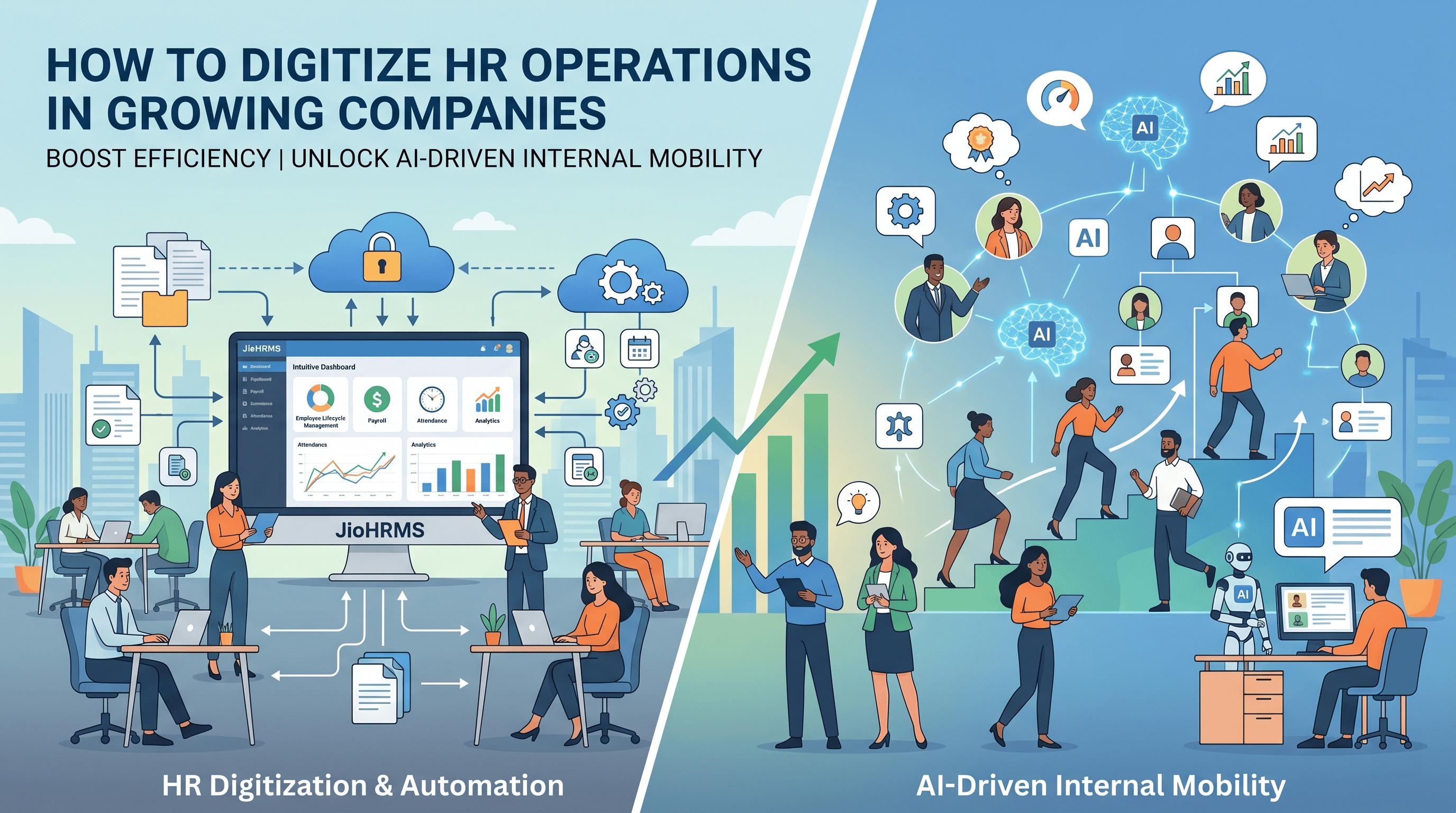
How to Digitize HR Operations in Growing Companies

Growing companies face a critical inflection point: scale fast or fall behind. As workforce complexity increases, manual HR processes become bottlenecks. This is where leaders must rethink how to digitize HR operations strategically. At the same time, a parallel transformation is reshaping talent strategy—AI-driven internal mobility. Organizations are no longer just hiring externally; they are unlocking hidden talent within. This blog explores both dimensions: How to digitize HR operations effectively How AI is revolutionizing internal mobility How forward-thinking platforms like JioHRMS enable both Digitizing HR operations improves efficiency, compliance, and employee experience AI is transforming internal mobility through skills matching and predictive analytics Automation reduces manual HR tasks by up to 60–70% Modern organizations rely on digital HR tools for scalability A structured roadmap ensures successful HR transformation Platforms like JioHRMS help unify HR processes into a single ecosystemTL;DR
Why Growing Companies Must Digitize HR Operations
In early stages, spreadsheets and manual workflows may suffice. However, as companies scale beyond 50–100 employees, inefficiencies multiply.
Key Challenges Without HR Digitalization
Fragmented employee data across systems
Time-consuming manual approvals
Compliance risks
Poor employee experience
Lack of workforce insights
This is where HR digitalization becomes not just beneficial—but essential.
Business Impact of Digitization
When organizations digitize HR operations, they unlock:
Faster decision-making
Real-time analytics
Reduced operational costs
Improved employee retention
Scalable HR processes
According to industry benchmarks, companies that invest in hr process automation can reduce administrative workload by up to 40%.
What Does It Mean to Digitize HR Operations?
To digitize HR operations means replacing manual, paper-based, or disconnected systems with integrated digital platforms that automate and optimize HR functions.
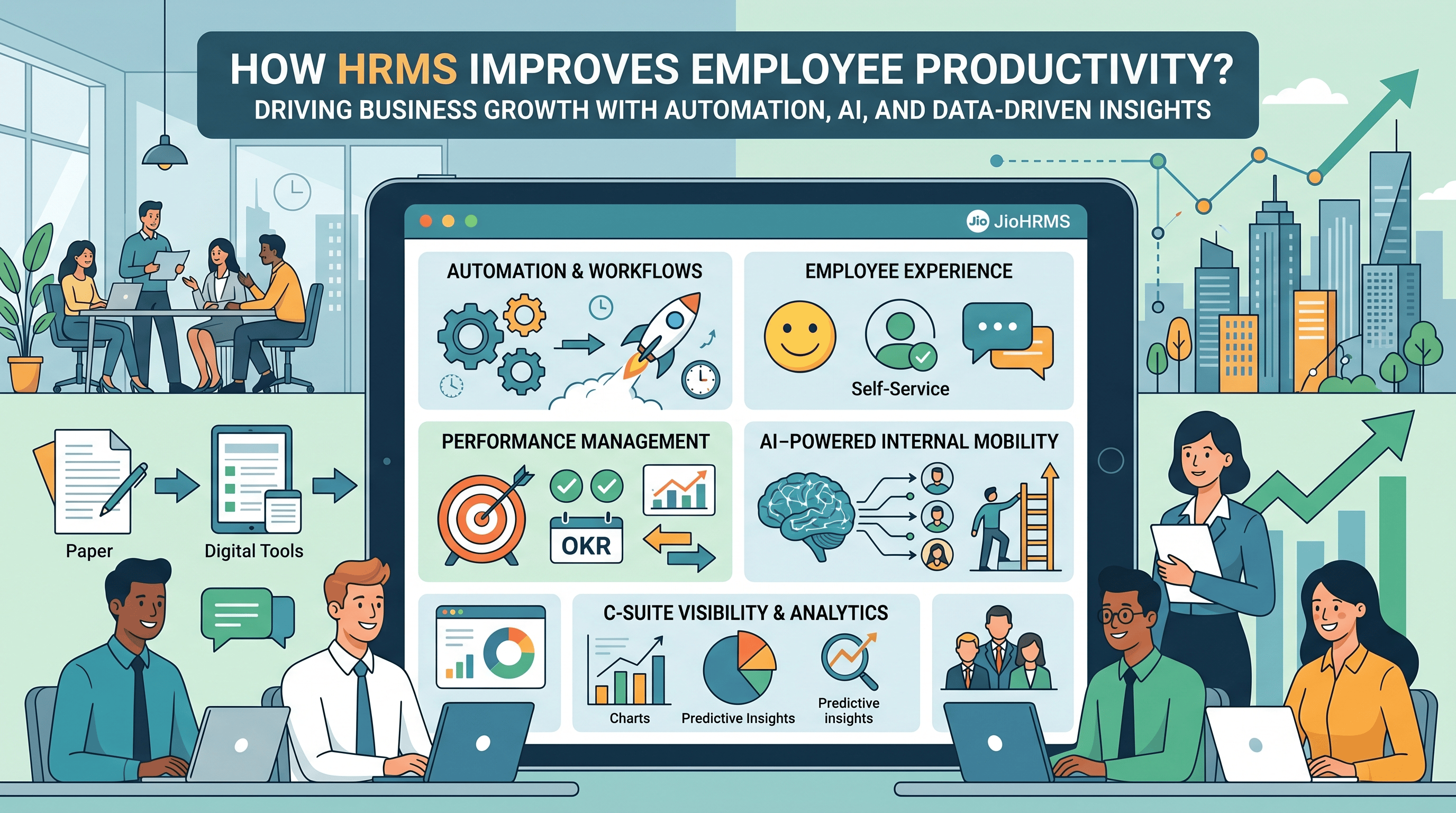
Core Components of Digital HR Transformation
1. Employee Lifecycle Management
From hiring to exit, everything is tracked digitally.
2. Payroll & Compliance Automation
Accurate, timely payroll with built-in compliance checks.
3. Attendance & Leave Management
Automated tracking with real-time visibility.
4. Performance Management
Continuous feedback and goal tracking systems.
5. Workforce Analytics
Data-driven insights for strategic planning.
Modern digital HR tools unify these components into a single platform—eliminating silos and improving visibility.
The Strategic Role of AI in Internal Mobility
While companies focus on operational efficiency, talent optimization is equally critical. This is where AI enters the picture.
What Is Internal Mobility?
Internal mobility refers to moving employees across roles, departments, or projects within an organization.
Traditionally, this process was:
Manual
Manager-driven
Limited by visibility
AI changes everything.
How AI Is Revolutionizing Internal Mobility
1. Skills-Based Talent Matching
AI analyzes employee skills, experience, and performance data to recommend internal opportunities.
Instead of relying on resumes or manager input, systems now:
Identify hidden skills
Match employees with roles
Suggest career paths
This ensures the right talent is used effectively.
2. Predictive Career Pathing
AI predicts future roles based on:
Employee performance
Learning patterns
Industry trends
This enables proactive talent development—reducing attrition.
3. Personalized Learning & Development
AI-driven platforms recommend:
Courses
Certifications
Skill-building programs
This aligns employee growth with organizational goals.
4. Bias Reduction in Talent Decisions
AI minimizes unconscious bias by focusing on data rather than subjective opinions.
This leads to:
Fair promotions
Diverse leadership pipelines
Transparent career progression
5. Real-Time Workforce Insights
Executives gain visibility into:
Skill gaps
Talent readiness
Internal hiring success rates
These insights are critical for strategic workforce planning.
The Connection Between Digitizing HR and Internal Mobility
To fully leverage AI in mobility, organizations must first digitize HR operations.
Why?
Because AI depends on data—and fragmented systems cannot provide clean, unified data.
Without Digitization:
Data is incomplete
Insights are inaccurate
AI adoption fails
With Digitization:
Data is centralized
AI models are accurate
Talent decisions improve
This is why hr process automation is the foundation for AI-driven HR transformation.
Step-by-Step Guide to Digitize HR Operations
Step 1: Assess Current HR Maturity
Start by evaluating:
Manual processes
System gaps
Data silos
This helps define your transformation roadmap.
Step 2: Define Business Objectives
Align HR digitization with business goals such as:
Scaling workforce
Improving retention
Enhancing employee experience
Step 3: Choose the Right Digital HR Platform
Look for platforms that offer:
End-to-end HR management
AI capabilities
Integration flexibility
Compliance support
Solutions like JioHRMS provide a unified ecosystem—covering payroll, attendance, performance, and analytics.
Step 4: Automate High-Impact Processes First
Focus on:
Payroll
Attendance
Leave management
Recruitment workflows
These areas deliver immediate ROI.
Step 5: Centralize Employee Data
Create a single source of truth for:
Employee records
Performance data
Skills and competencies
This is critical for both efficiency and AI adoption.
Step 6: Enable AI-Powered Features
Once data is centralized, implement:
Skill mapping
Internal job marketplaces
Predictive analytics
Step 7: Train Teams and Drive Adoption
Technology alone is not enough.
Ensure:
HR teams are trained
Managers understand the system
Employees are engaged
Key Features to Look for in Digital HR Tools
When selecting digital HR tools, C-suite leaders should prioritize:
1. Scalability
The system should grow with your organization.
2. Automation Capabilities
Strong hr process automation reduces manual workload.
3. Analytics & Reporting
Real-time dashboards for decision-making.
4. Employee Self-Service
Empowers employees and reduces HR dependency.
5. AI Integration
Supports internal mobility and predictive insights.
6. Compliance Management
Ensures adherence to labor laws and regulations.
Platforms like JioHRMS combine these features into a seamless experience—helping organizations digitize HR operations without complexity.
Common Mistakes to Avoid
1. Digitizing Without Strategy
Technology without clear goals leads to poor adoption.
2. Ignoring Change Management
Employees resist change if not guided properly.
3. Choosing Fragmented Tools
Multiple tools create data silos.
4. Underestimating Data Quality
AI depends on accurate data.
5. Delaying AI Adoption
Competitors leveraging AI gain a significant edge.
ROI of Digitizing HR Operations
Executives often ask: what is the return?
Tangible Benefits
30–50% reduction in HR administrative tasks
Faster hiring cycles
Improved payroll accuracy
Reduced compliance risks
Intangible Benefits
Better employee experience
Stronger employer brand
Data-driven leadership decisions
Most importantly, organizations that digitize HR operations are better positioned for future growth.
The Future of HR: Integrated, Intelligent, and Employee-Centric
The future of HR lies at the intersection of:
Automation
AI
Employee experience
Organizations that combine these elements will:
Attract top talent
Retain high performers
Build agile workforces
AI-powered internal mobility will become a standard—not a differentiator.
How JioHRMS Supports HR Digitization and AI-Driven Mobility
While many platforms offer isolated features, JioHRMS focuses on integration and intelligence.
Key Capabilities
Unified employee data platform
Automated payroll and compliance
Attendance and leave management
Performance tracking
Workforce analytics
By enabling organizations to digitize HR operations, JioHRMS creates a strong foundation for AI-driven initiatives like internal mobility.
Conclusion
For growing companies, the question is no longer whether to digitize HR operations—but how fast.
At the same time, AI is redefining how organizations manage talent internally. Companies that embrace both will gain a significant competitive advantage.
By combining hr digitalization, hr process automation, and AI-driven insights, leaders can transform HR from a support function into a strategic powerhouse.
Ready to transform your HR into a strategic growth engine?
Start your journey to digitize HR operations and unlock AI-driven internal mobility with JioHRMS.
Book a demo today and see how smarter HR can drive smarter business decisions.