 Why Employee Onboarding Matters for Business Growth
What Is Employee Onboarding?

Employee onboarding is the strategic process of integrating new hires into an organization by aligning them with company culture, tools, expectations, and performance goals.
For modern enterprises, onboarding is no longer limited to paperwork and orientation. Instead, it is a data-driven, experience-focused journey that directly impacts employee engagement, retention, and productivity.
C-suite leaders today recognize that employee onboarding is a critical business function, not just an HR activity. It shapes how employees perceive leadership, culture, and long-term growth opportunities.
TL;DR
Employee onboarding is a structured process to integrate new hires effectively
A strong onboarding process improves retention, productivity, and engagement
AI is revolutionizing onboarding through personalization and automation
Internal mobility is enhanced with AI-driven skill mapping and career paths
Using employee onboarding software ensures scalability and consistency
Strategic onboarding drives long-term business growth and talent retention
Why Employee Onboarding Matters for Business Growth
A well-structured employee onboarding strategy creates measurable business outcomes:
1. Faster Time-to-Productivity
Employees who go through a structured onboarding process become productive up to 50% faster.
2. Improved Retention
Organizations with strong onboarding programs improve retention by over 80%.
3. Enhanced Employer Branding
A seamless onboarding experience positions the organization as a top employer.
4. Stronger Cultural Alignment
Employees understand company values early, reducing misalignment risks.
For leadership, this translates into reduced hiring costs, higher ROI, and sustainable workforce growth.
The Complete Onboarding Process Explained
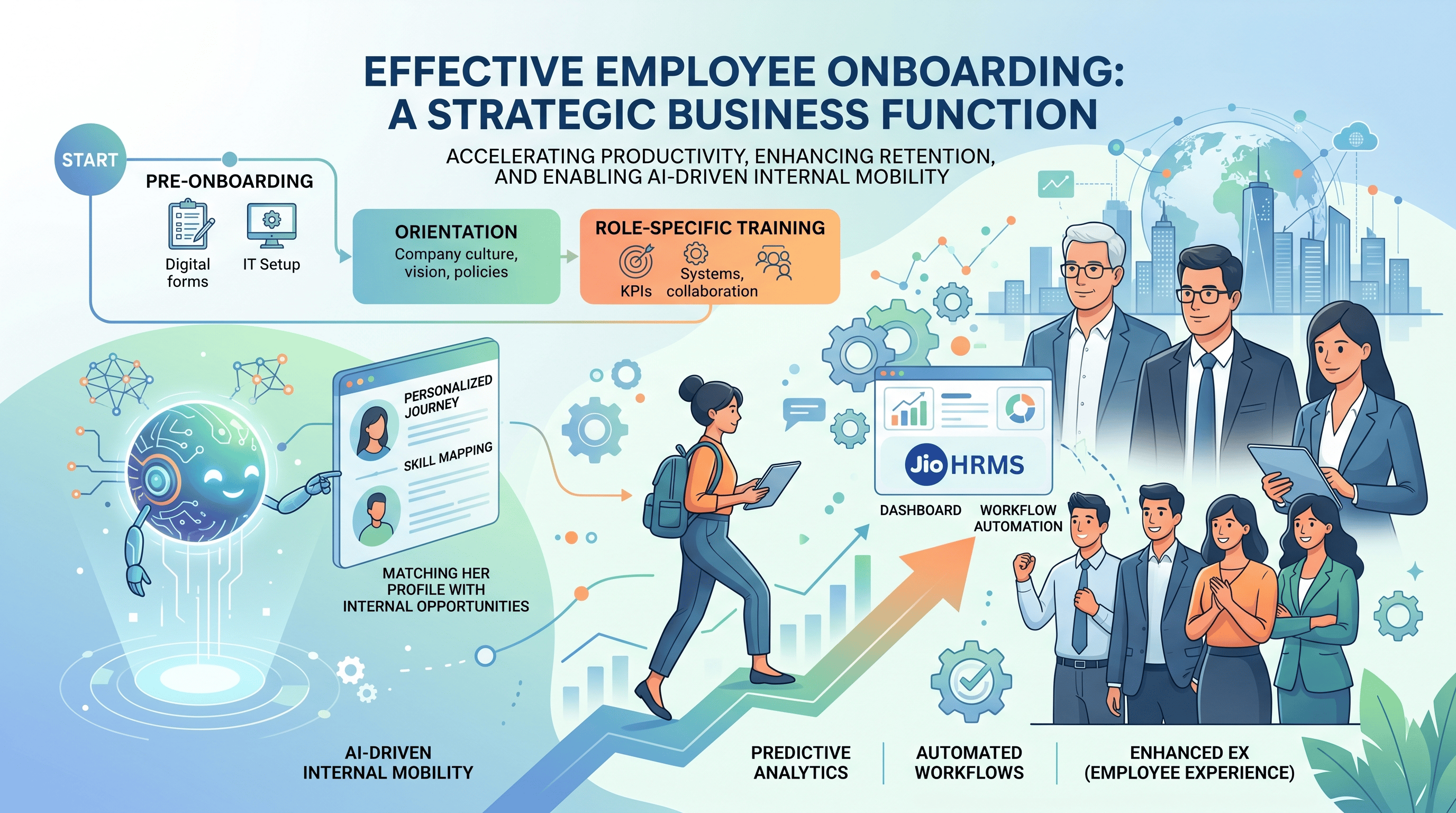
An effective onboarding process is not a one-day event it’s a phased journey.
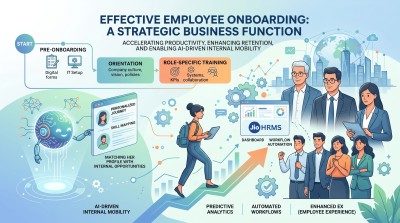
1. Pre-Onboarding (Before Day One)
Offer letter acceptance and documentation
Digital paperwork automation
IT setup and access provisioning
Welcome communication
This stage sets expectations and reduces first-day anxiety.
2. Orientation Phase
Company vision, mission, and leadership introduction
Policy and compliance training
HR and administrative walkthrough
This phase ensures employees understand organizational structure and expectations.
3. Role-Specific Training
Job responsibilities and KPIs
Tools, systems, and workflows
Team collaboration processes
A structured approach ensures clarity and accountability.
4. Integration Phase
Team bonding activities
Manager check-ins
Feedback loops
This stage builds relationships and trust.
5. Continuous Development
Learning programs
Performance tracking
Career path discussions
Modern employee onboarding extends beyond 90 days into continuous engagement.
How AI Is Revolutionizing Internal Mobility in Modern Workplaces
AI is redefining how organizations approach talent management and employee onboarding is at the center of this transformation.
1. AI-Driven Personalization
AI analyzes employee profiles, skills, and behavior to create personalized onboarding journeys.
Customized learning paths
Role-specific onboarding modules
Adaptive training schedules
This ensures employees receive relevant, timely information, improving engagement.
2. Intelligent Skill Mapping
AI systems map employee skills against organizational requirements.
Identify skill gaps early
Recommend internal opportunities
Align onboarding with future roles
This directly supports internal mobility strategies, making onboarding a long-term investment.
3. Predictive Analytics for Retention
AI predicts employee behavior using onboarding data.
Identify disengagement risks
Recommend interventions
Improve retention strategies
Leadership can make proactive decisions instead of reactive ones.
4. Automated Workflows
AI-powered employee onboarding software automates repetitive tasks:
Document verification
Compliance tracking
Workflow approvals
This reduces HR workload and ensures consistency.
5. Enhanced Employee Experience
AI chatbots and assistants provide:
Instant query resolution
24/7 support
Guided onboarding journeys
This creates a seamless, user-friendly experience.
The Role of Employee Onboarding Software in Modern Organizations
Technology plays a crucial role in scaling onboarding processes.
Key Capabilities of Modern Solutions
1. Centralized Onboarding Dashboard
Track employee progress in real-time.
2. Workflow Automation
Eliminate manual processes and reduce errors.
3. Data-Driven Insights
Measure onboarding effectiveness with analytics.
4. Integration with HR Systems
Seamlessly connect with payroll, performance, and learning systems.
How JioHRMS Adds Value
JioHRMS enables organizations to:
Automate the entire onboarding process
Provide personalized onboarding journeys
Track employee engagement and progress
Ensure compliance with minimal effort
Importantly, it transforms onboarding into a strategic, scalable function, rather than an operational burden.
Best Practices for Effective Employee Onboarding
To maximize the impact of employee onboarding, organizations should follow these proven practices:
1. Start Before Day One
Pre-onboarding engagement increases excitement and reduces uncertainty.
2. Focus on Experience, Not Just Process
Create meaningful interactions rather than just completing tasks.
3. Leverage Data and AI
Use analytics to continuously improve onboarding effectiveness.
4. Involve Leadership
C-suite involvement reinforces organizational values and vision.
5. Personalize the Journey
Different roles require different onboarding experiences.
6. Set Clear Milestones
Define measurable goals for the first 30, 60, and 90 days.
7. Enable Continuous Feedback
Use surveys and check-ins to refine the process.
Common Challenges in Employee Onboarding
Even mature organizations face challenges:
1. Lack of Standardization
Inconsistent onboarding leads to varied employee experiences.
2. Manual Processes
Inefficiencies slow down the onboarding journey.
3. Limited Visibility
Leadership lacks insights into onboarding performance.
4. Poor Engagement
Employees feel disconnected early in their journey.
How to Overcome These Challenges
Implement employee onboarding software
Use AI-driven insights
Standardize workflows
Continuously monitor and optimize
Measuring the Success of Employee Onboarding
C-suite leaders must track key metrics:
Time-to-productivity
Employee retention rate
Engagement scores
Training completion rates
Internal mobility rate
These metrics provide a clear ROI on onboarding investments.
The Future of Employee Onboarding
The future is AI-first, data-driven, and experience-centric.
Key Trends
Hyper-personalized onboarding journeys
Integration with internal mobility platforms
AI-driven career pathing
Continuous onboarding beyond the first year
Organizations that invest in modern employee onboarding strategies will gain a competitive advantage in talent acquisition and retention.
Why C-Suite Leaders Must Prioritize Employee Onboarding
For executives, onboarding is not just an HR initiative it is a strategic lever for business success.
A strong onboarding framework:
Aligns employees with business goals
Enhances workforce productivity
Supports long-term talent development
Drives innovation through engaged employees
Conclusion
Employee onboarding has evolved into a strategic business function that directly impacts organizational success.
By combining a structured onboarding process, leveraging employee onboarding software, and integrating AI-driven insights, organizations can:
Accelerate productivity
Improve retention
Enable internal mobility
Build a future-ready workforce
For modern enterprises, the question is no longer whether to invest in onboarding but how effectively it is implemented.
Ready to transform your onboarding experience into a strategic advantage?
Discover how JioHRMS can help you streamline your employee onboarding,
nhance employee experience, and unlock the full potential of your workforce.
Start building a smarter, AI-driven onboarding journey today.