 Understanding Employee Exit Management
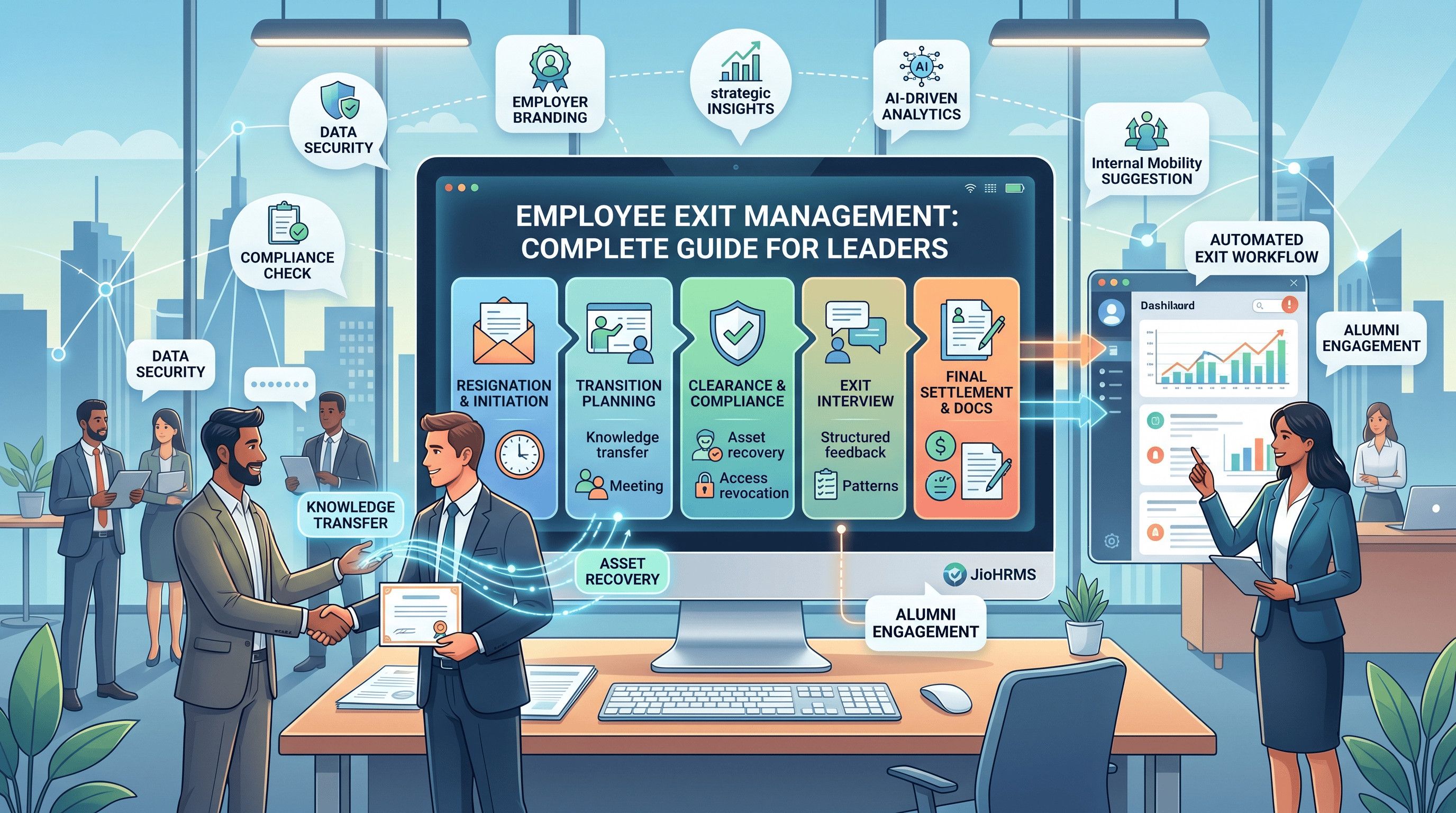
What Is Employee Exit Management?

In today’s dynamic business environment, organizations invest heavily in attracting and retaining talent. However, what often gets overlooked is the final phase of the employee lifecycle. For C-suite leaders, this phase is not just an administrative necessity; it is a strategic opportunity to protect organizational value, strengthen employer branding, and unlock insights that drive long-term growth.
As workplaces evolve with automation and AI-driven systems, the way companies handle exits is transforming rapidly. This blog explores everything leaders need to know about employee exit management, including its importance, process, challenges, and how technology, especially AI, is reshaping it.
TL;DR
Employee exit management is the structured process of managing an employee’s departure.
A strong exit strategy protects data, ensures compliance, and preserves brand reputation.
AI is transforming exit workflows through automation, predictive insights, and analytics.
Effective exit management improves alumni relations and future hiring opportunities.
Platforms like JioHRMS streamline the entire exit lifecycle from clearance to documentation.
Poor exit handling can lead to legal risks, knowledge loss, and reduced employee trust.
Understanding Employee Exit Management
At its core, employee exit management refers to the structured approach organizations use to manage an employee’s departure from resignation or termination to their final working day and beyond.
This includes:
Knowledge transfer
Asset recovery
Documentation
Compliance checks
Exit interviews
Unlike traditional administrative offboarding, modern employee exit management focuses on creating a seamless, respectful, and insight-driven experience.
For leadership teams, this process directly impacts:
Employer branding
Data security
Workforce planning
Organizational culture
Why Employee Exit Management Matters for C-Suite Leaders
Executives often focus on hiring and retention, but neglecting employee exit management can create serious risks.
Protecting Organizational Knowledge
When employees leave without structured knowledge transfer, companies lose critical expertise. A strong system ensures continuity and minimizes disruption.
Safeguarding Data and Assets
Employees often have access to sensitive information. Proper exit protocols reduce the risk of data breaches and compliance violations.
Enhancing Employer Brand
Departing employees can become brand advocates or critics. A positive exit experience strengthens your reputation in the talent market.
Driving Strategic Insights
Exit interviews reveal patterns behind attrition. When analyzed properly, they can inform leadership decisions.
Key Stages in the Employee Exit Management Process
A well-defined employee exit management framework includes multiple stages, each contributing to a smooth transition.
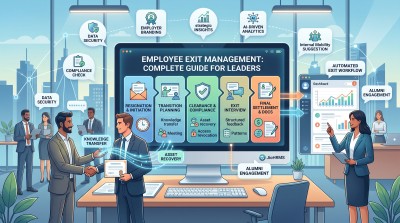
1. Resignation or Termination Initiation
This stage begins when an employee submits resignation or when the organization initiates separation.
2. Transition Planning
Managers ensure knowledge transfer and assign responsibilities to maintain workflow continuity.
3. Clearance and Compliance
Departments such as IT, HR, and finance coordinate to ensure:
Asset return
Access revocation
Final settlements
4. Exit Interview
A structured feedback session helps identify:
Reasons for leaving
Organizational gaps
Improvement opportunities
5. Final Settlement and Documentation
This includes salary, benefits, and legal documentation.
6. Alumni Engagement
Forward-thinking companies maintain relationships with former employees for future hiring or partnerships.
The Role of the Offboarding Process in Employee Exit Management
The offboarding process is a crucial component of employee exit management, but it is only one part of the larger strategy.
While offboarding focuses on operational tasks like:
Access removal
Equipment return
Final payroll
Employee exit management goes beyond, incorporating strategic elements like:
Experience design
Data analytics
Brand perception
Employee Separation Process vs Exit Management
The employee separation process typically refers to the formal end of employment resignation, retirement, or termination.
However, employee exit management is broader and more strategic. It includes:
Emotional experience of the employee
Organizational learning
Long-term relationship building
For C-suite leaders, this distinction is critical. Managing separation is operational. Managing exits is strategic.
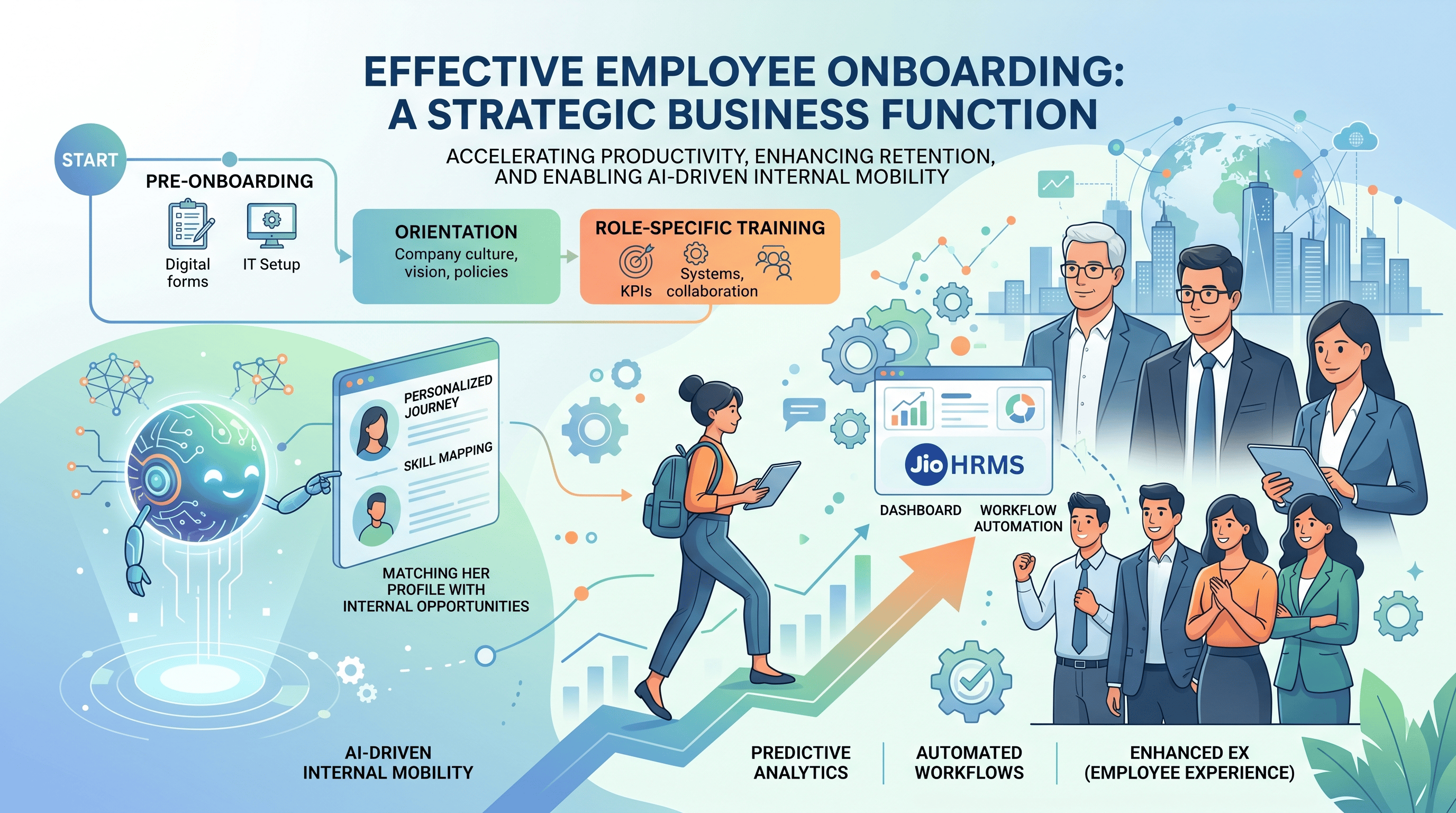
How AI Is Revolutionizing Internal Mobility in Modern Workplaces
Although this blog focuses on employee exit management, it’s impossible to ignore how AI-driven systems are reshaping workforce dynamics including internal mobility.
Predictive Attrition Analysis
AI tools can identify employees at risk of leaving by analyzing:
Engagement levels
Performance trends
Behavioral patterns
This allows leaders to intervene early or prepare exit strategies.
Smart Knowledge Transfer
AI systems can automatically:
Document workflows
Capture employee expertise
Create knowledge repositories
This reduces dependency on individuals.
Automated Exit Workflows
Modern HRMS platforms, such as JioHRMS, use AI to:
Trigger exit workflows
Assign tasks across departments
Track completion in real time
Data-Driven Exit Insights
AI-powered analytics transform exit interviews into actionable insights by identifying patterns across departments and roles.
Internal Mobility Enablement
Before employees exit, AI can suggest internal opportunities based on skills and preferences reducing attrition.
Common Challenges in Employee Exit Management
Even large enterprises struggle with employee exit management due to:
Lack of Standardization
Without a structured process, exits become inconsistent and error-prone.
Poor Communication
Misalignment between departments leads to delays and confusion.
Compliance Risks
Missing documentation or improper handling can result in legal issues.
Data Security Concerns
Failure to revoke access promptly can expose sensitive data.
Limited Insights
Manual exit interviews often fail to generate meaningful data.
Best Practices for Effective Employee Exit Management
To optimize employee exit management, organizations should adopt the following strategies:
Standardize the Process
Create a unified framework that applies across departments and locations.
Automate Workflows
Use HR technology to eliminate manual tasks and ensure consistency.
Conduct Meaningful Exit Interviews
Ask structured, unbiased questions and analyze responses systematically.
Focus on Experience
Ensure the process is respectful and transparent to maintain goodwill.
Leverage Data Analytics
Use insights from exits to improve retention strategies.
The Role of HR Technology in Modern Exit Management
Digital transformation has made employee exit management more efficient and strategic.
Centralized Dashboard
HR leaders can track all exit activities in one place.
Automated Notifications
Departments are notified automatically for pending tasks.
Compliance Tracking
Systems ensure all legal requirements are met before closure.
Document Management
All exit-related documents are stored securely and easily accessible.
Platforms like JioHRMS integrate these features seamlessly, enabling organizations to handle exits with precision and efficiency without adding operational burden.
Measuring the Success of Employee Exit Management
To evaluate the effectiveness of your employee exit management strategy, track the following metrics:
Exit process completion time
Employee satisfaction scores
Compliance adherence rate
Knowledge transfer effectiveness
Rehire rate (boomerang employees)
These KPIs provide a clear picture of how well your organization manages exits.
Future Trends in Employee Exit Management
The future of employee exit management is being shaped by:
AI and Automation
From predictive analytics to automated workflows, AI will continue to dominate.
Employee Experience Focus
Organizations will prioritize exit experience as much as onboarding.
Integration with Talent Strategy
Exit data will play a key role in workforce planning and internal mobility.
Alumni Networks
Companies will build strong alumni communities for rehiring and referrals.
Why C-Suite Leaders Should Prioritize Employee Exit Management
For executives, employee exit management is not just an HR function it is a business-critical strategy.
It impacts:
Risk management
Brand perception
Talent pipeline
Organizational intelligence
Ignoring this phase can lead to hidden costs, while optimizing it can unlock significant value.
Conclusion
In an era where talent is the most valuable asset, every stage of the employee lifecycle matters including the end.
A well-designed employee exit management strategy ensures that departures are handled with professionalism, efficiency, and strategic intent. It protects the organization while leaving a lasting positive impression on employees.
With AI-driven tools and modern HR platforms like JioHRMS, organizations can transform exit management from a routine process into a powerful source of insight and competitive advantage.
If you’re looking to streamline and modernize your employee exit management process while gaining actionable insights, it’s time to rethink your approach.
Explore how intelligent HR platforms like JioHRMS can help you automate workflows,
ensure compliance, and turn employee exits into strategic opportunities for growth.